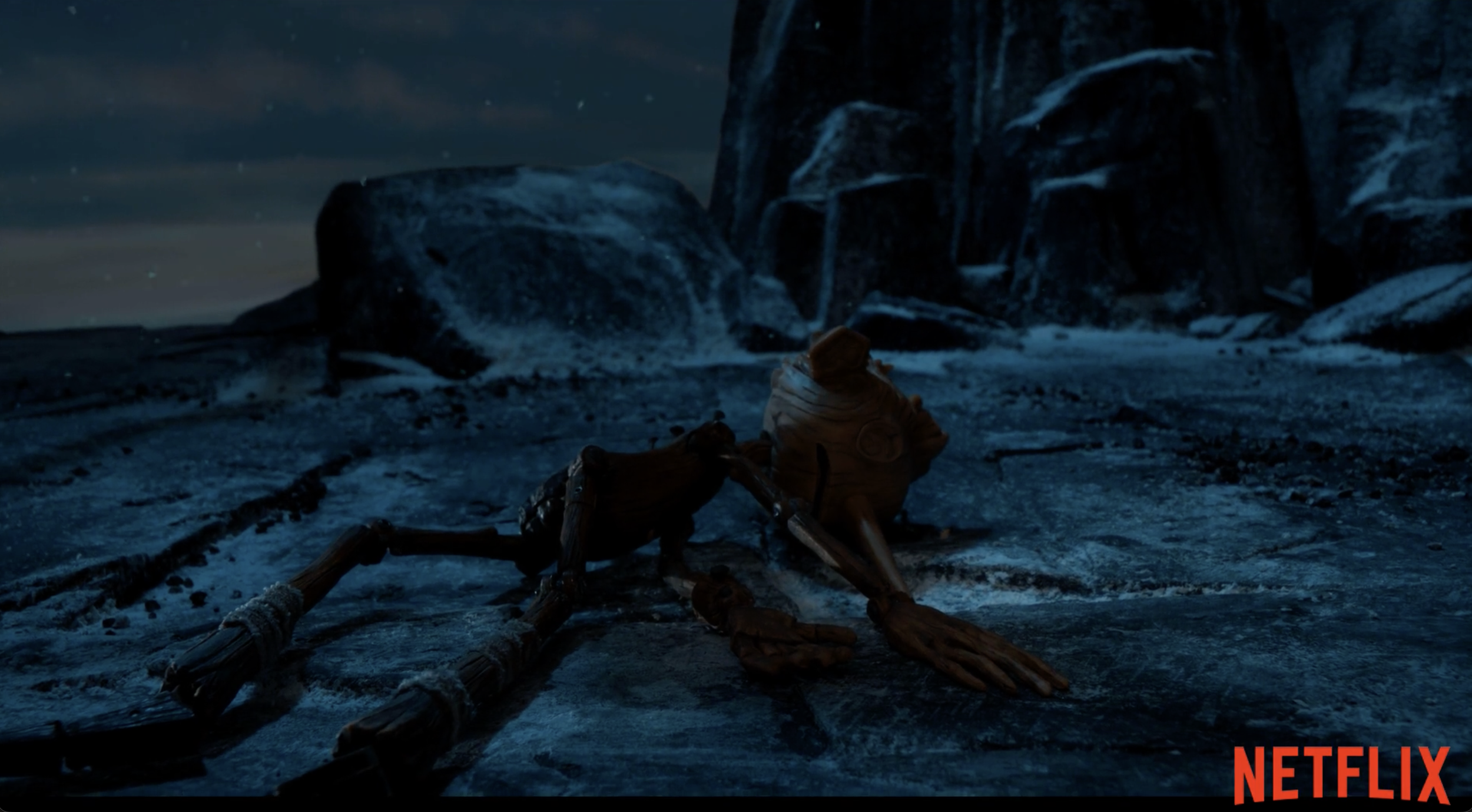
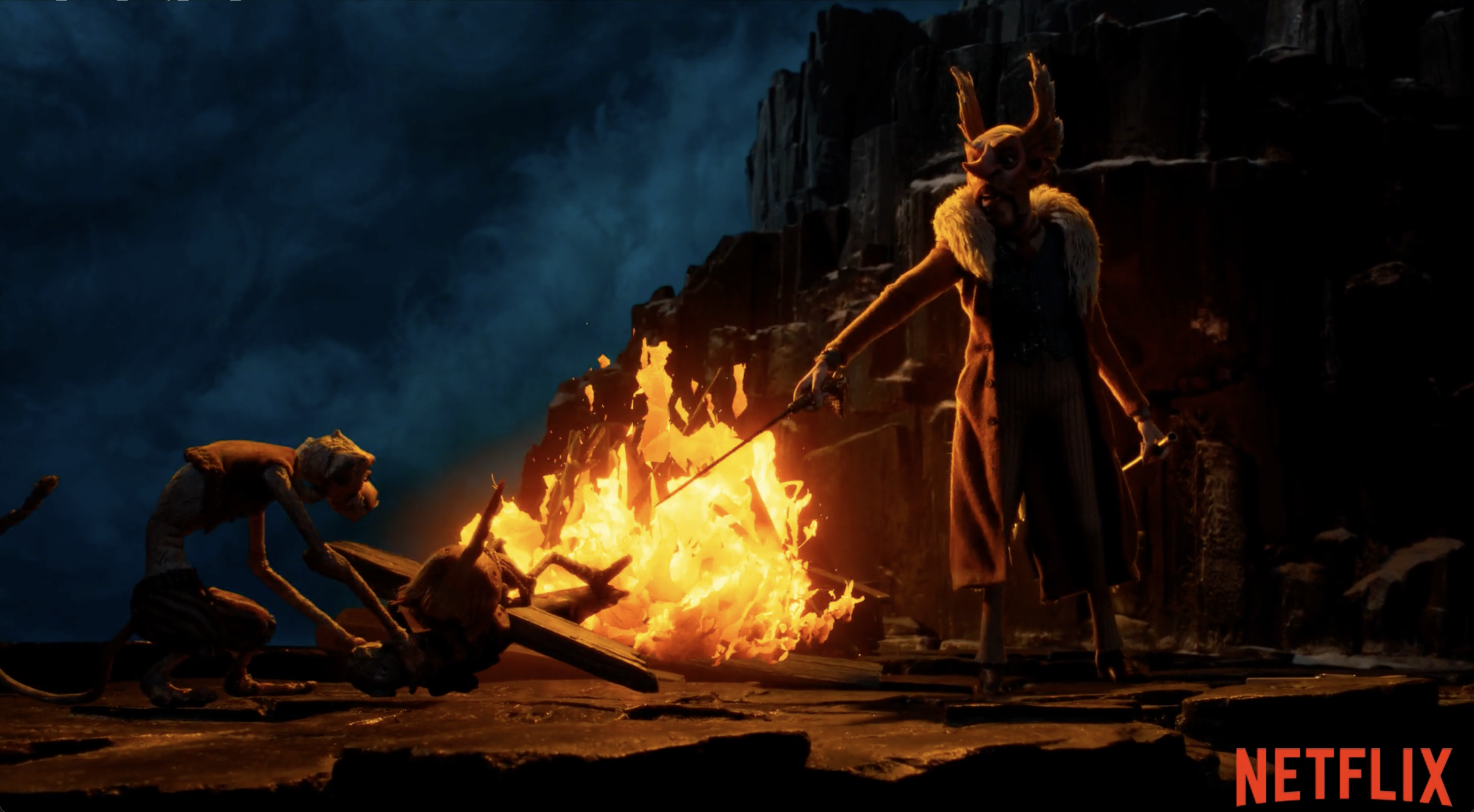
Model Maker: Volpe’s Cane and Sword
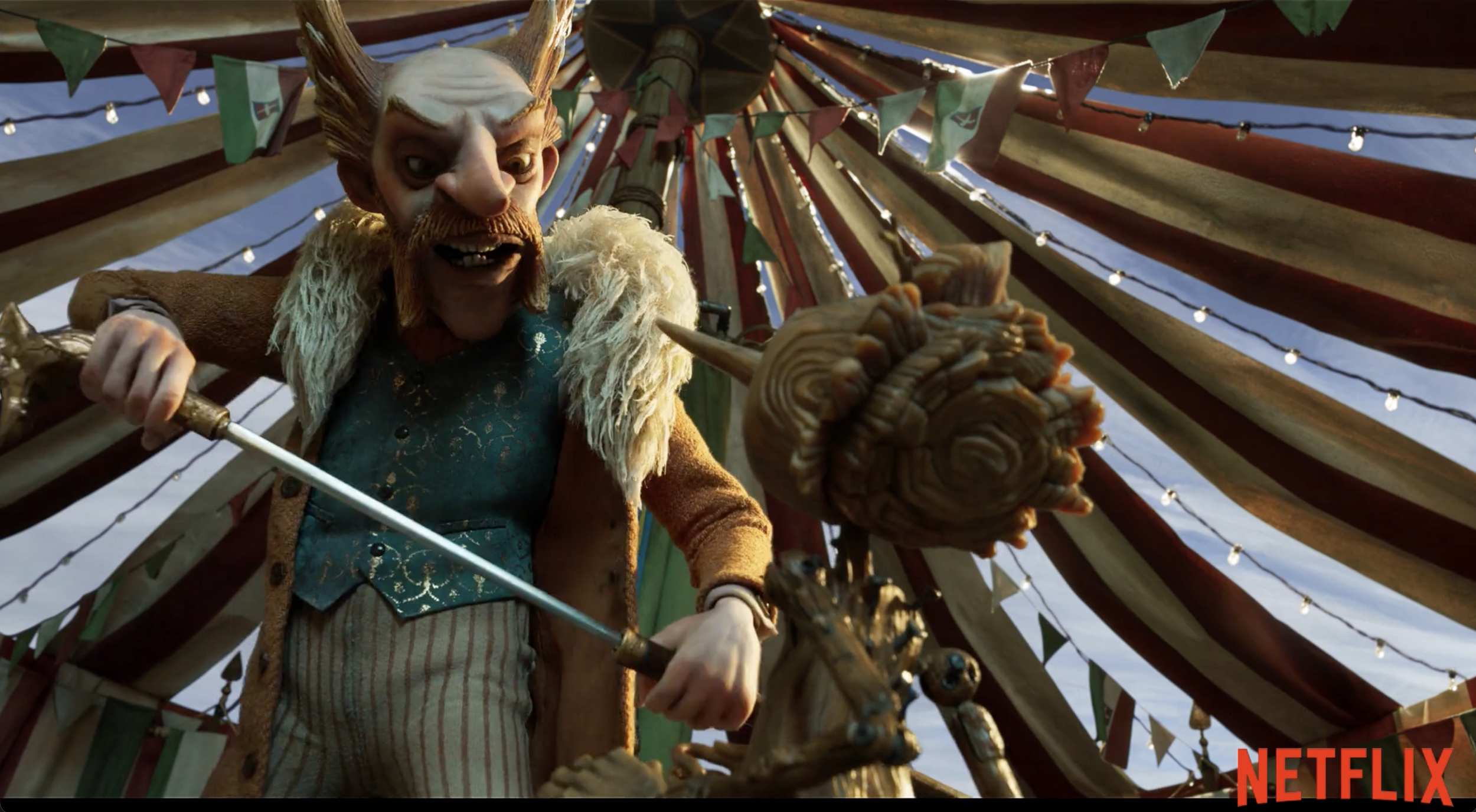
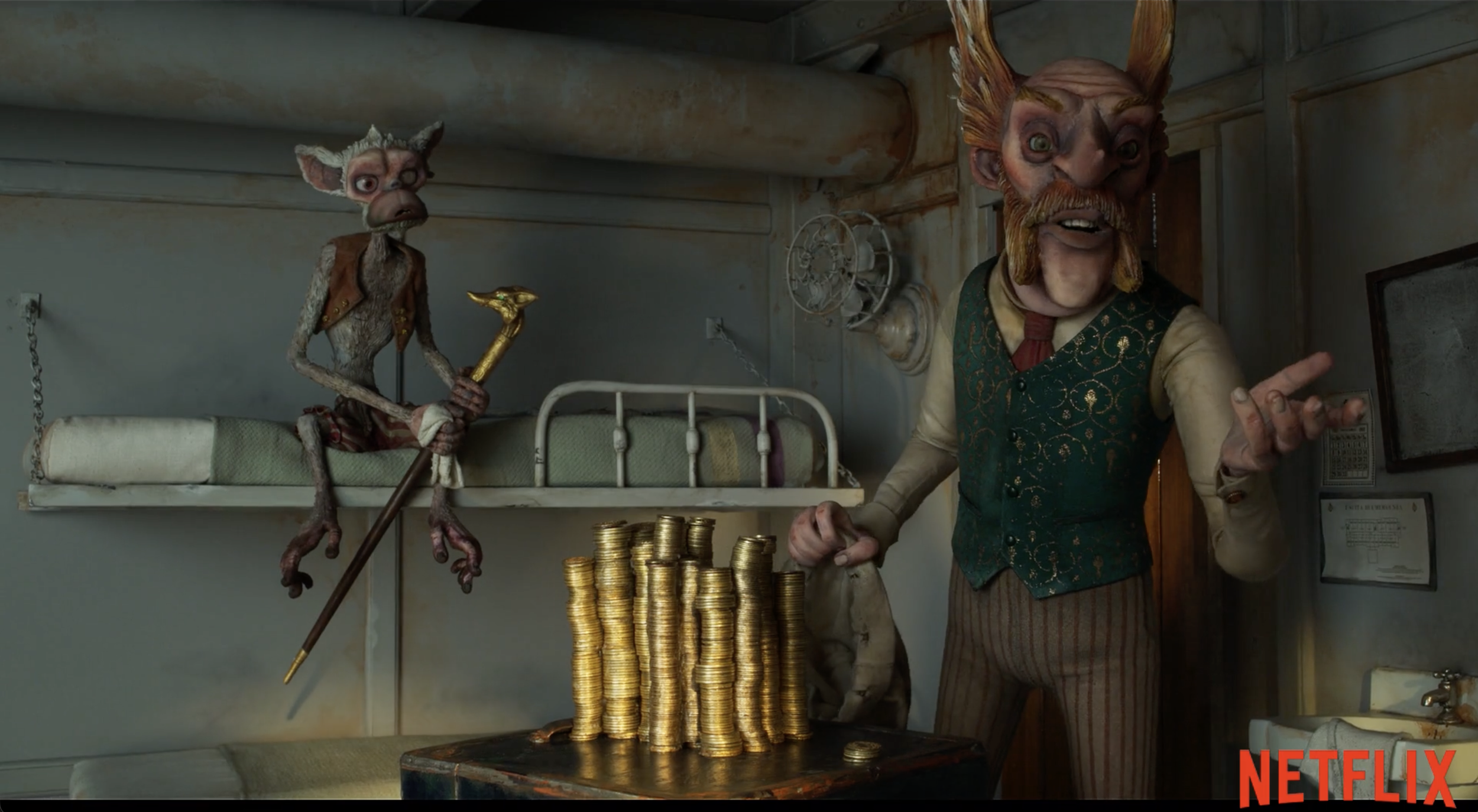
Volpe pulling his sword out if its sheath for the nth time.
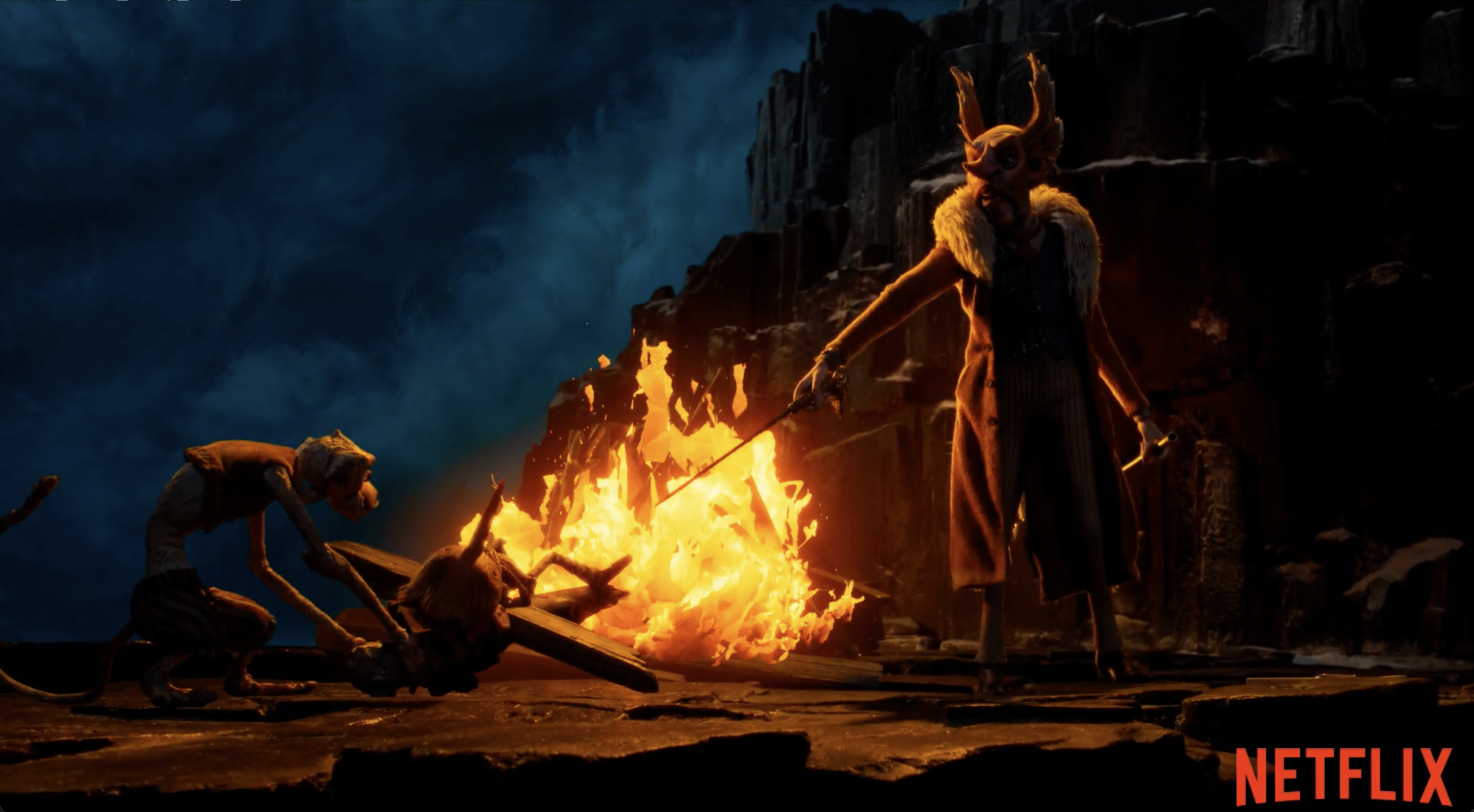
Volpe using his sword to intimidate Pinocchio.
Volpe’s cane was a heavily used prop that had numerous functions. It was also his sword and sheath, and he would use it to gesture and dance and pivot. I came up with a system where the tips had three different types of rig points including monofilament, a tie down screw, or a decorative tip. The fox head was also removable with a friction fit sleeve so that the very specially made swords that I cut, ground, and polished could be used on one stage while the sheath was being used on another stage. This reduced the number of swords that I needed to make which was helpful since they were time consuming and there upwards of 6 cane kits…maybe more, I’ve lost track. There was a kit for each Volpe puppet. I was really proud of the system I came up with and I insisted on giving a tutorial to the riggers and set dressers so that everyone would be empowered to use all the many functions that I had built into the prop. So often, technical details get lost in the telephone game of stages and I wanted to make sure my efforts were utilized to the maximum degree!
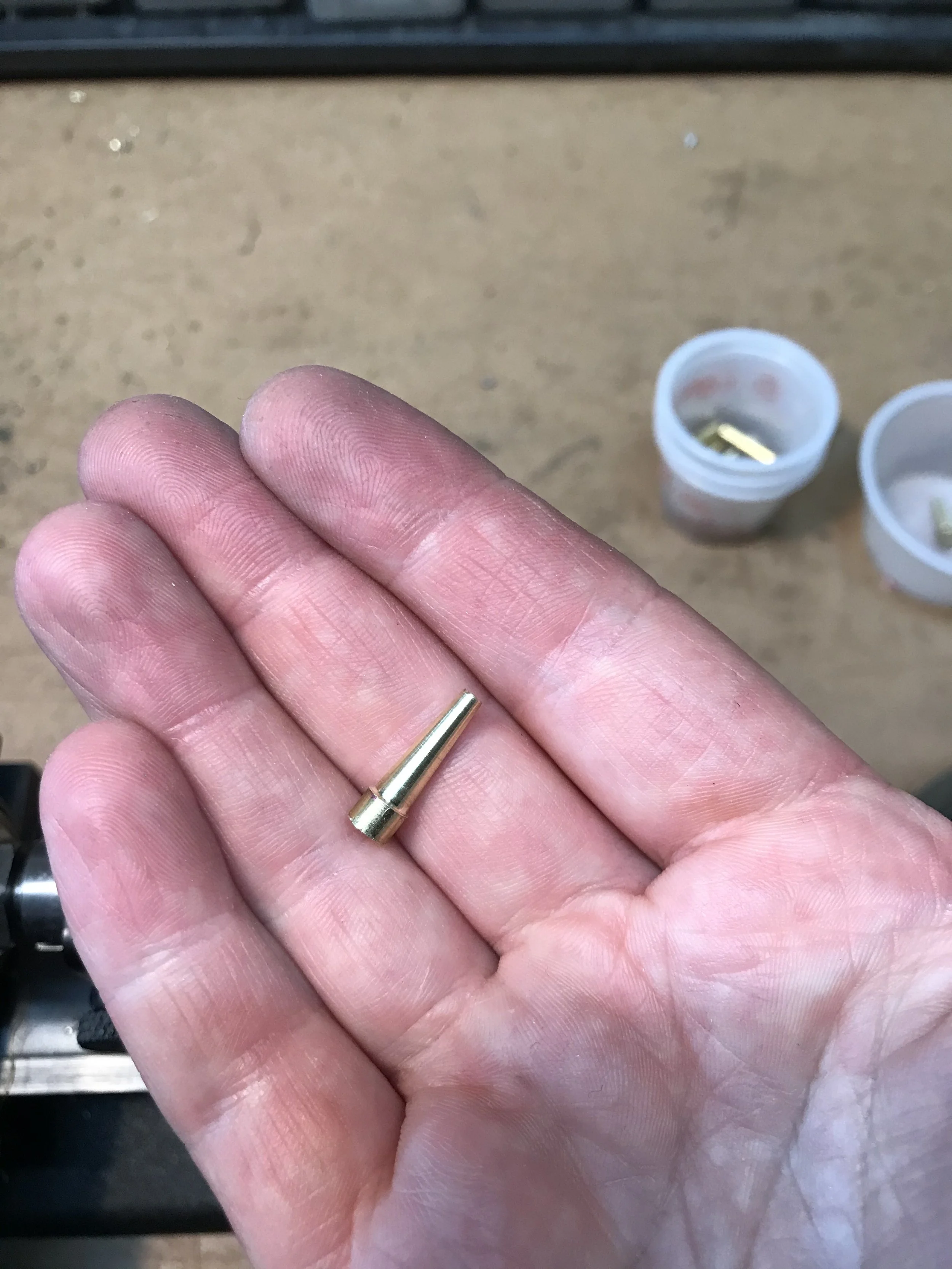
A brass sword tip that I lathed and tapped a tie down hole into.
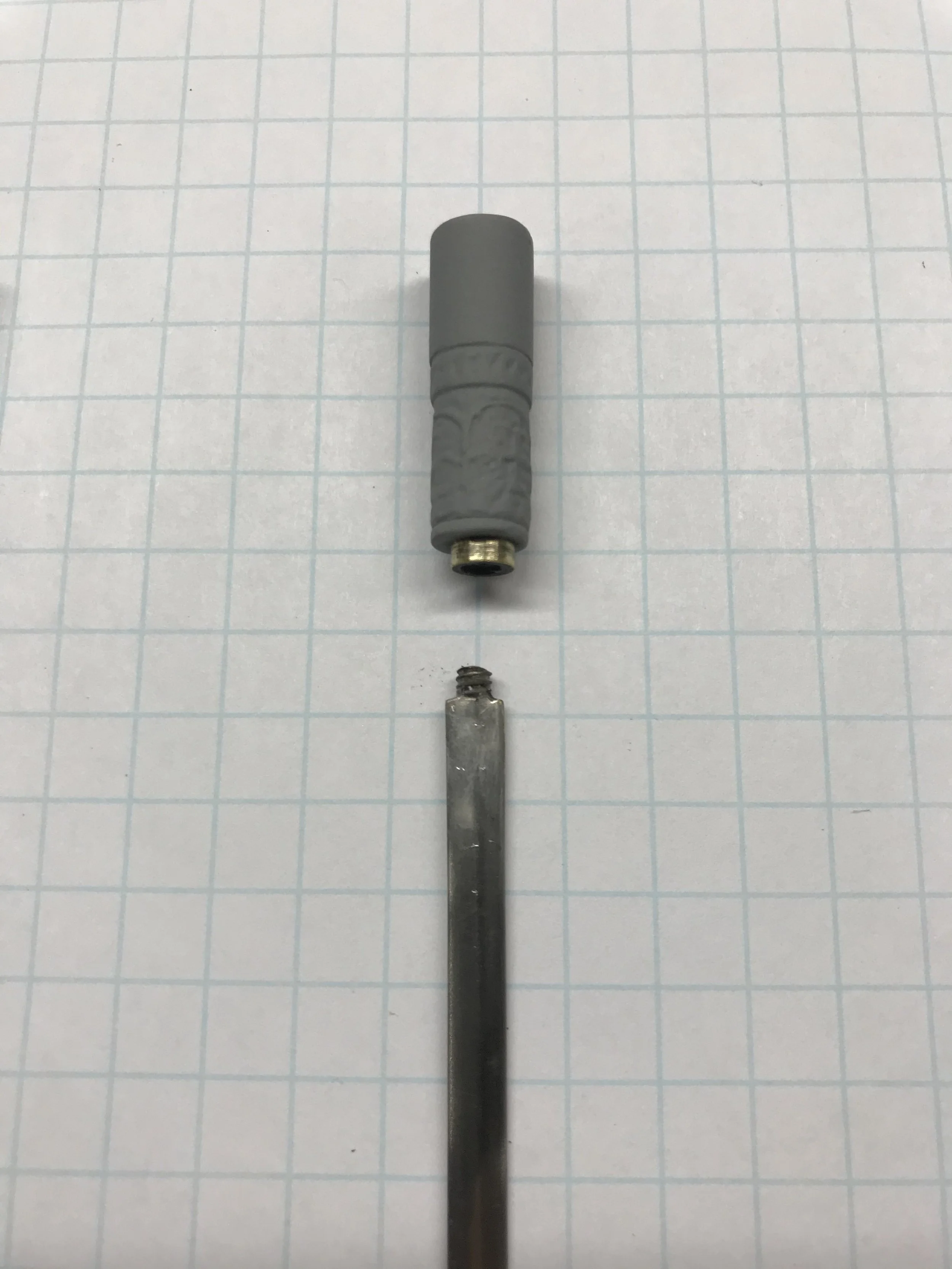
The sword attached to the handle with a screw and could be removed, and the handle could be used elsewhere. I wanted the sword to be able to come off the resin handle incase it needed to be re polished or freshly plated in chrome after heavy usage. The screw that I soldered on to the sword also made an extremely strong fusion onto the handle.
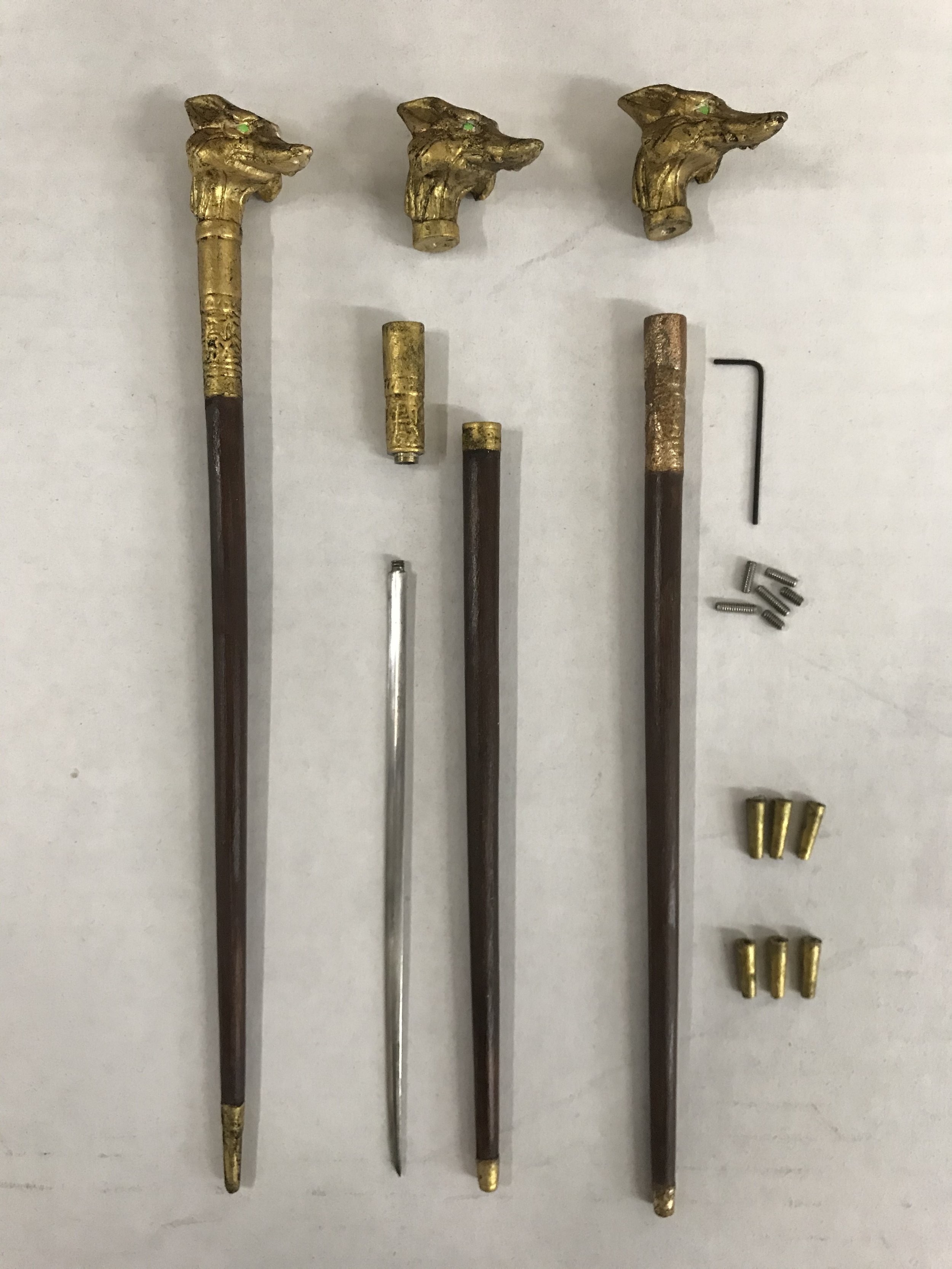
The contents of one Volpe sword and cane kit.
Model Maker: Scaffolding
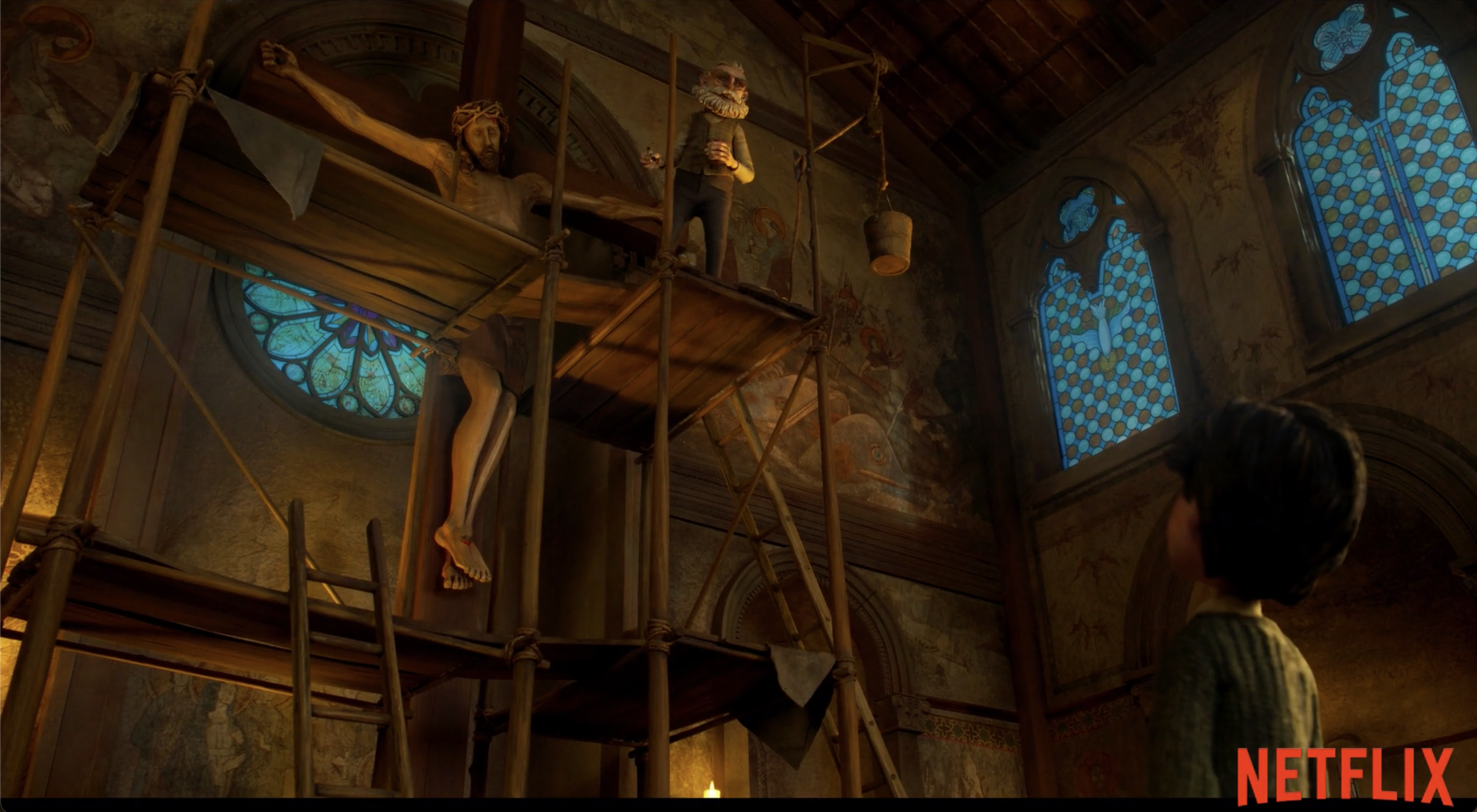
One of the first props I made on Pinocchio was the scaffolding for the church. Though not the most visually interesting of pieces I’ve worked on, it was actually quite the puzzle to solve. It had to withstand the weight of puppets and animation but look like it was made of raw timber poles. The interior structure is made of steel rod that I soldered with our tiny propane torches that are made for jewelry sized objects. That was a feat in itself and I took over the entire soldering station to get it done. I then tapped tie-down holes into the bottom of every rod.
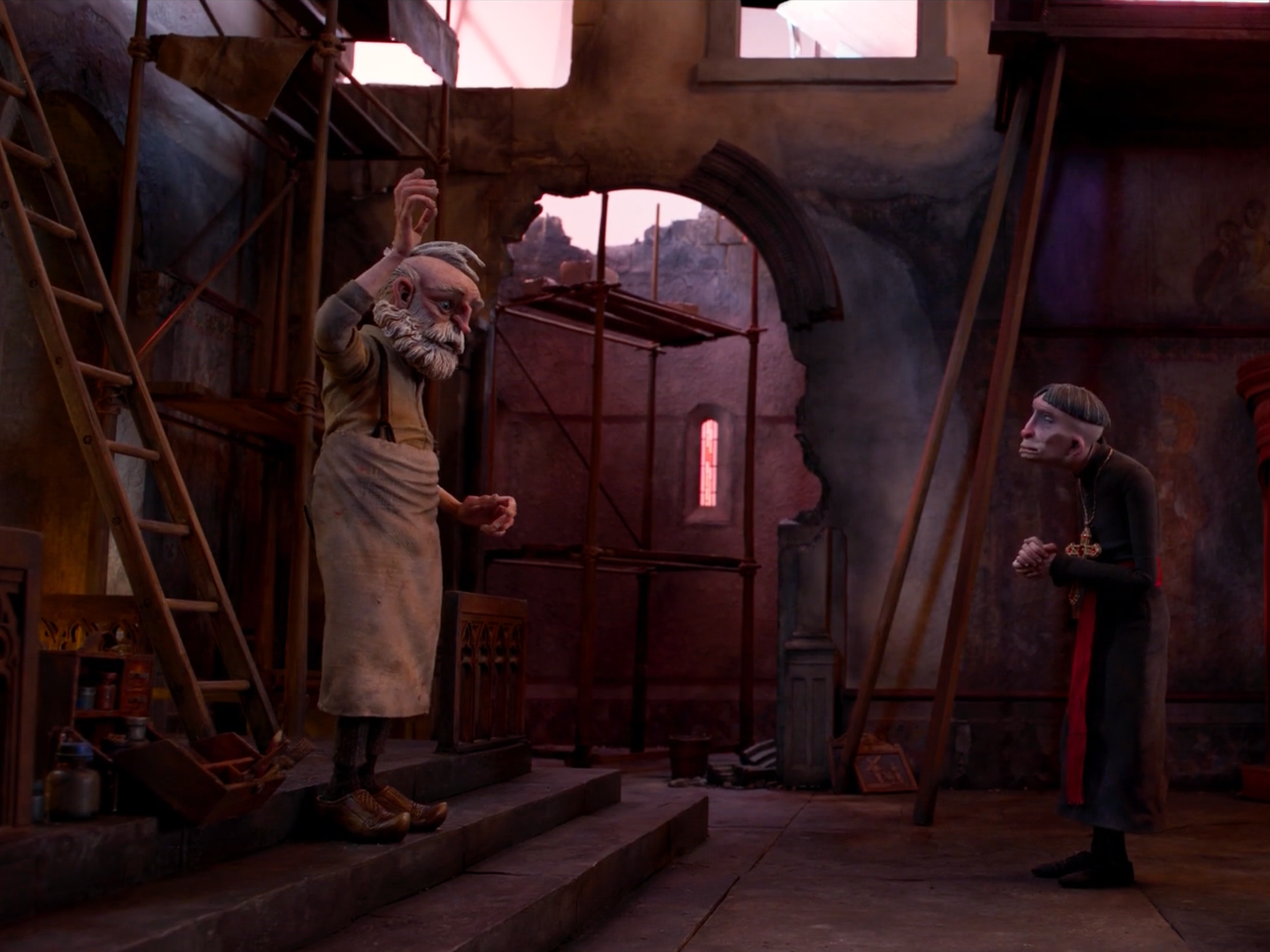
I was embarrassed when I met Guillermo Del Toro for the first time as he toured the studio because he asked me what I was working on, and at that point in the process I thought my work looked like an old steel frame I found at the junkyard. Nonetheless he graciously said it was “incredibly beautiful”. I will humbly admit, once I sculpted two part epoxy over every surface of the steel and formed it to look like timber, though still not the most magnificent prop, it started to live up to his complement. Most importantly it successfully performed as scaffolding for Geppetto during his Jesus install, and I never saw it wobble during production!
Model Maker: Coin Stacks and Hero Coins
Set Dresser: Volpe’s Cabin
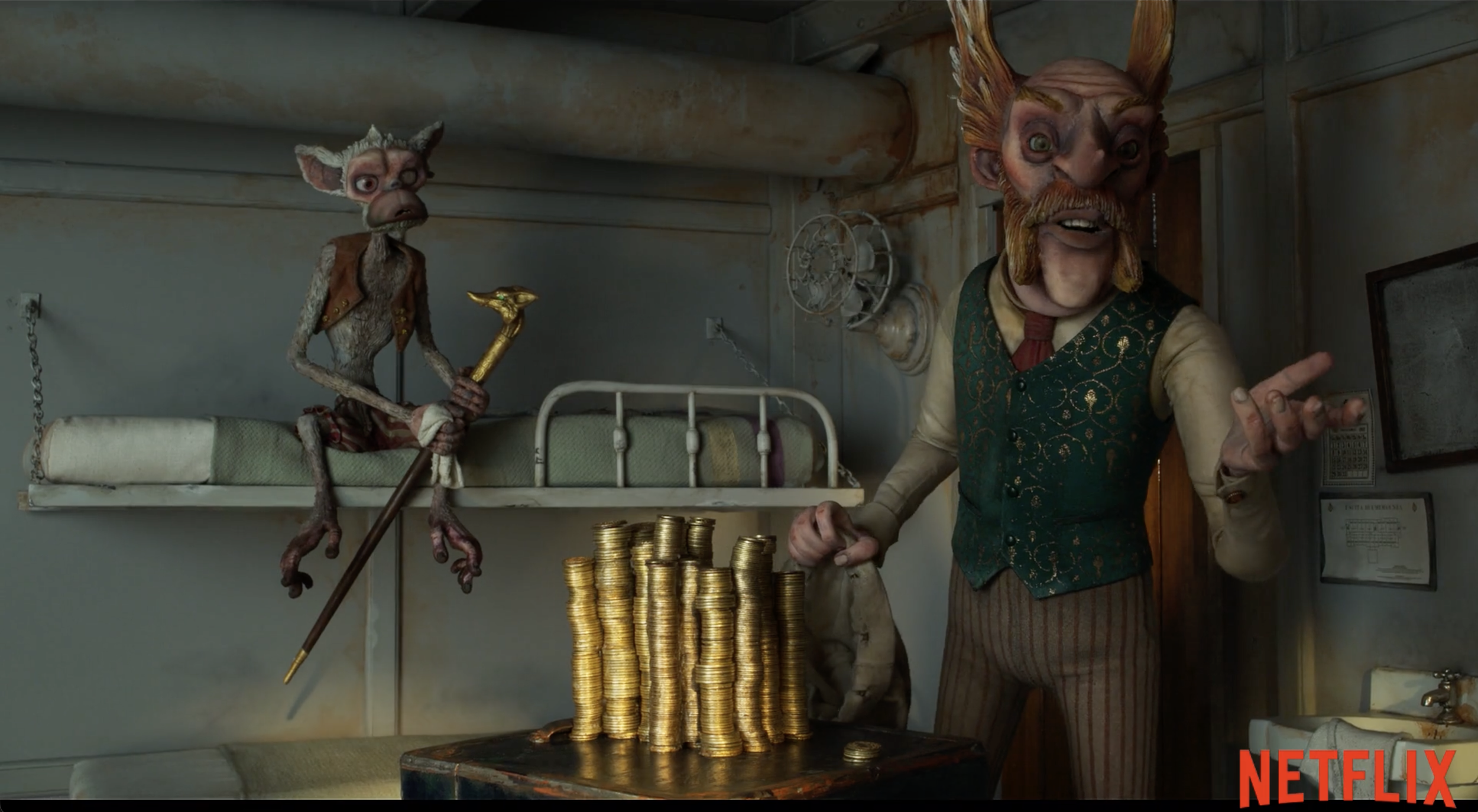
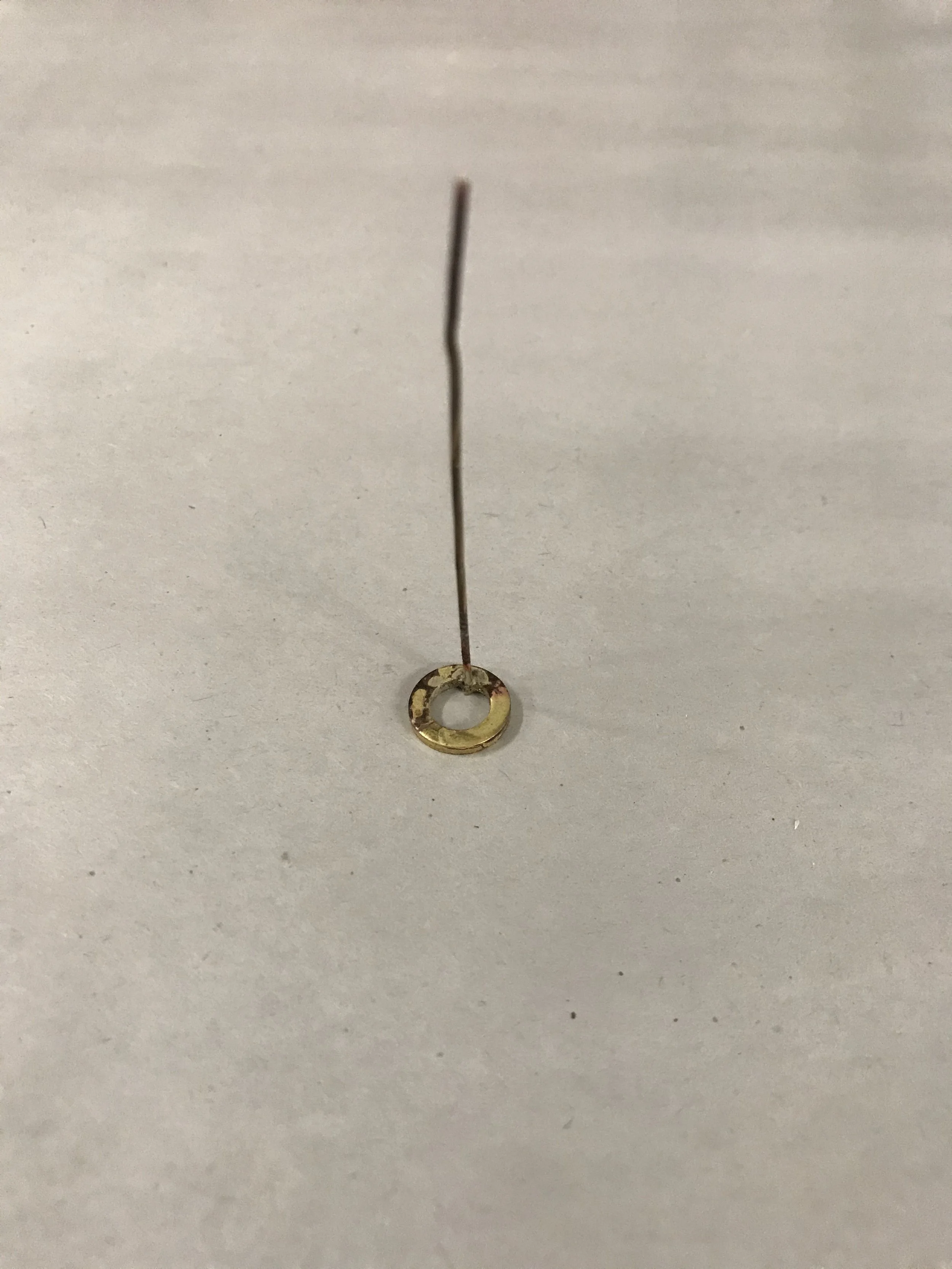
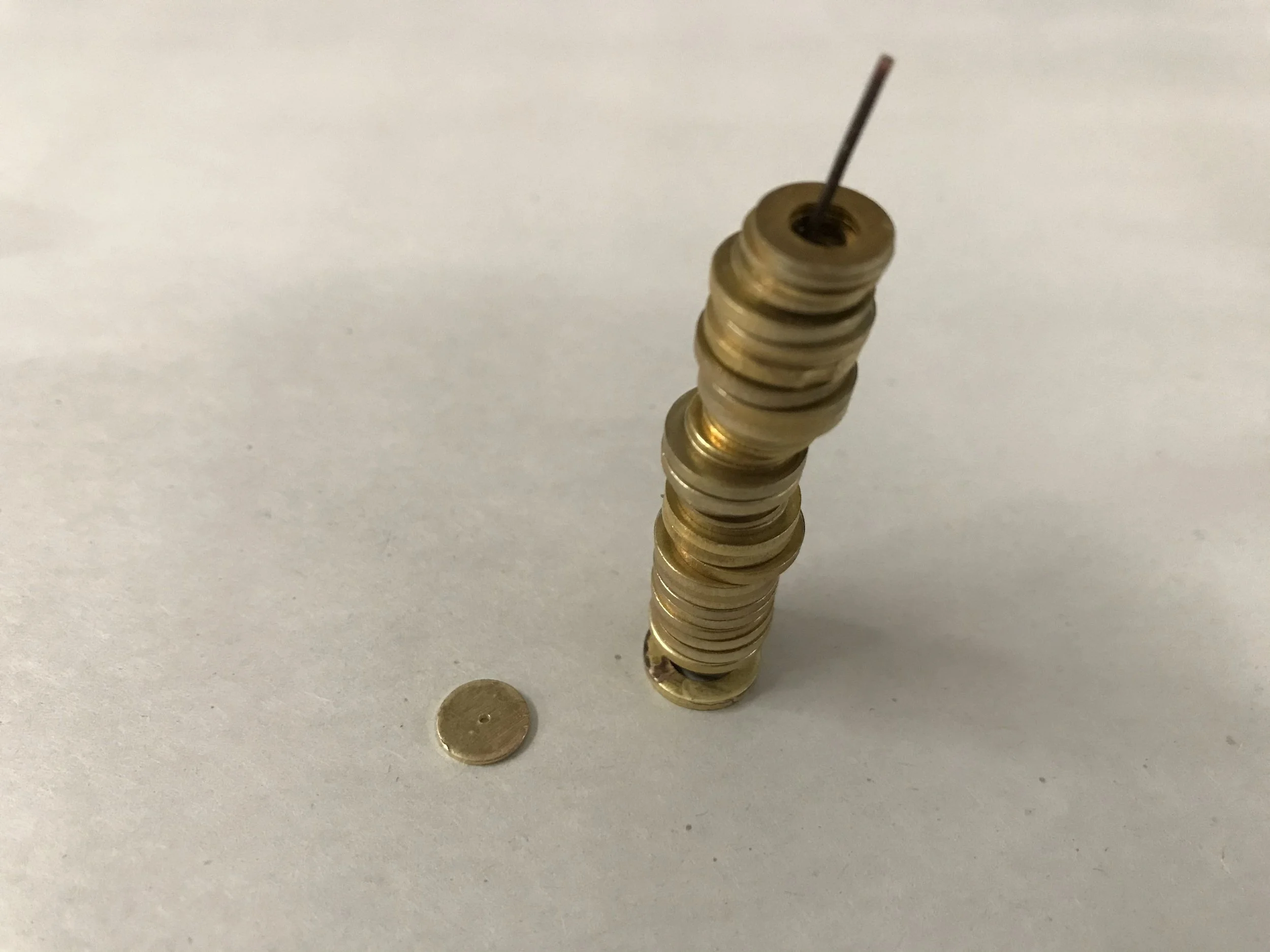
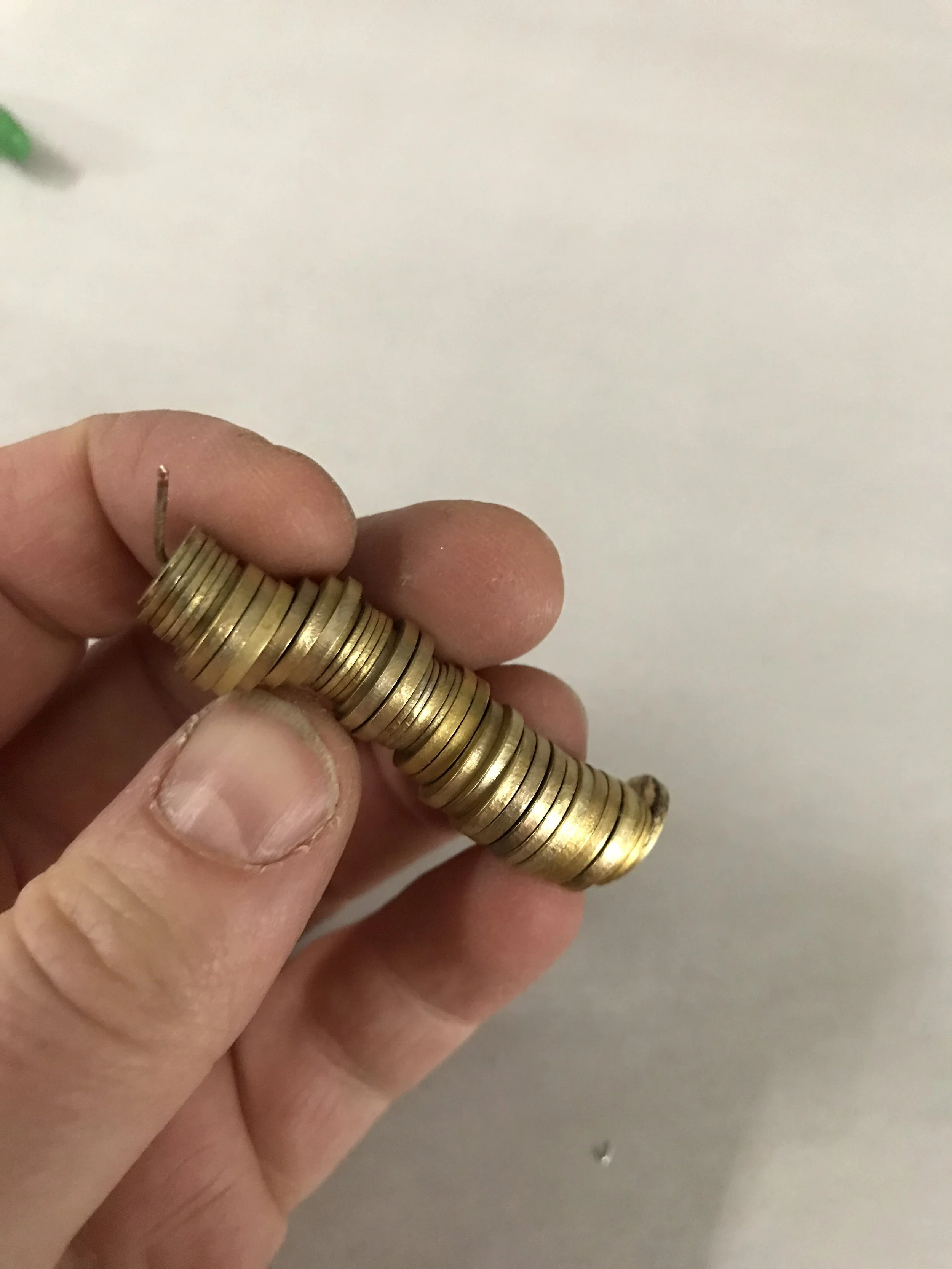
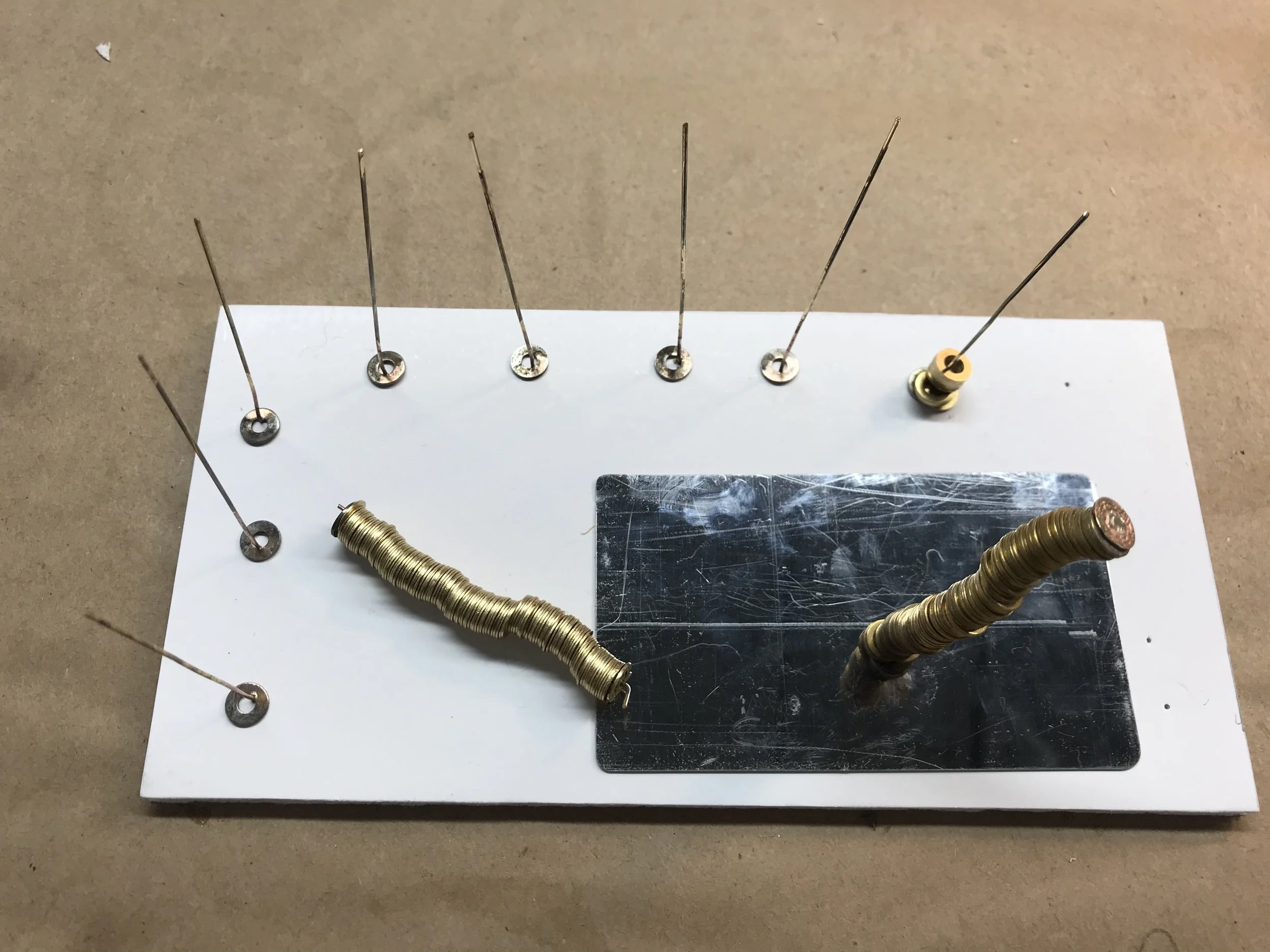
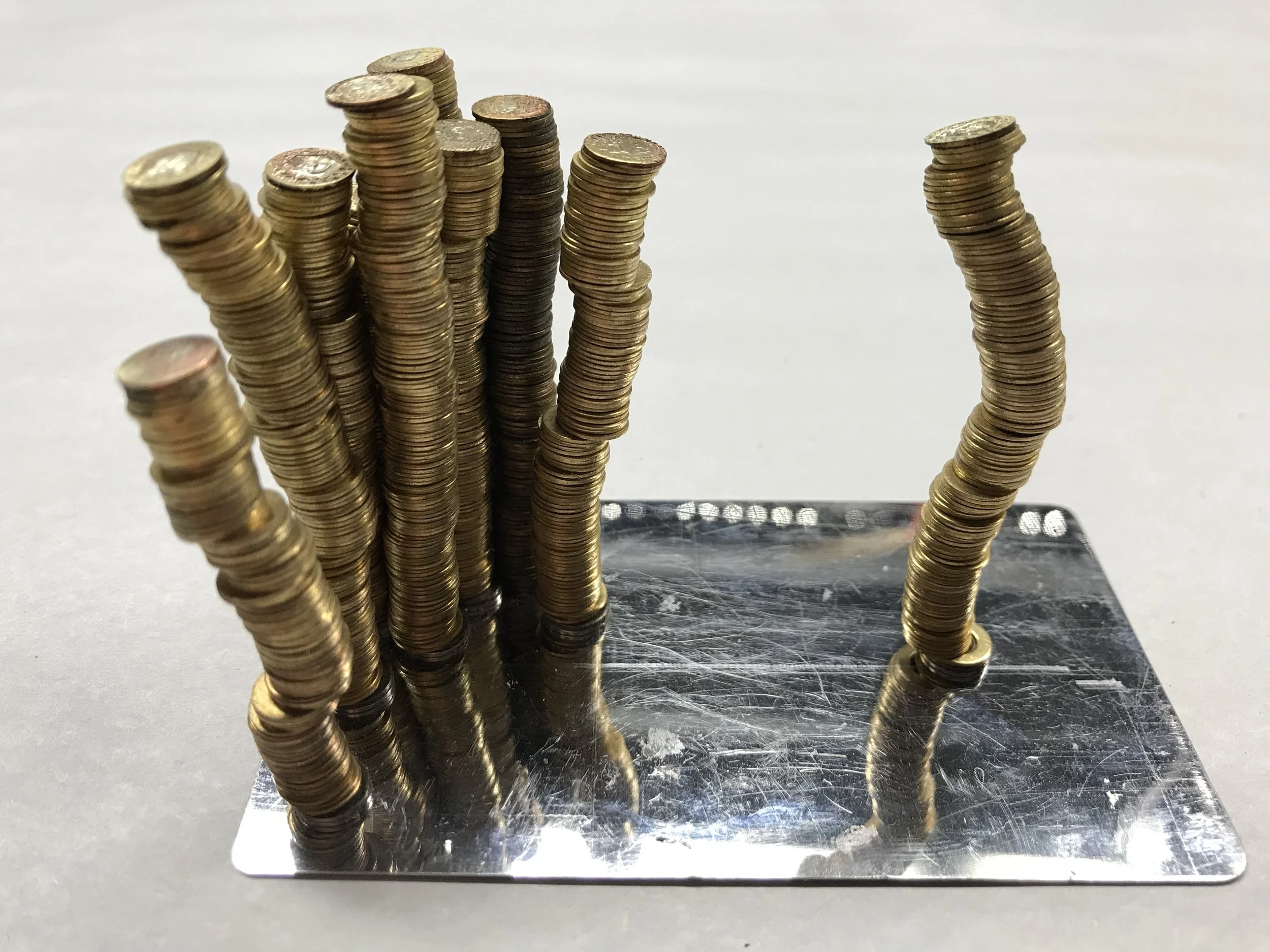
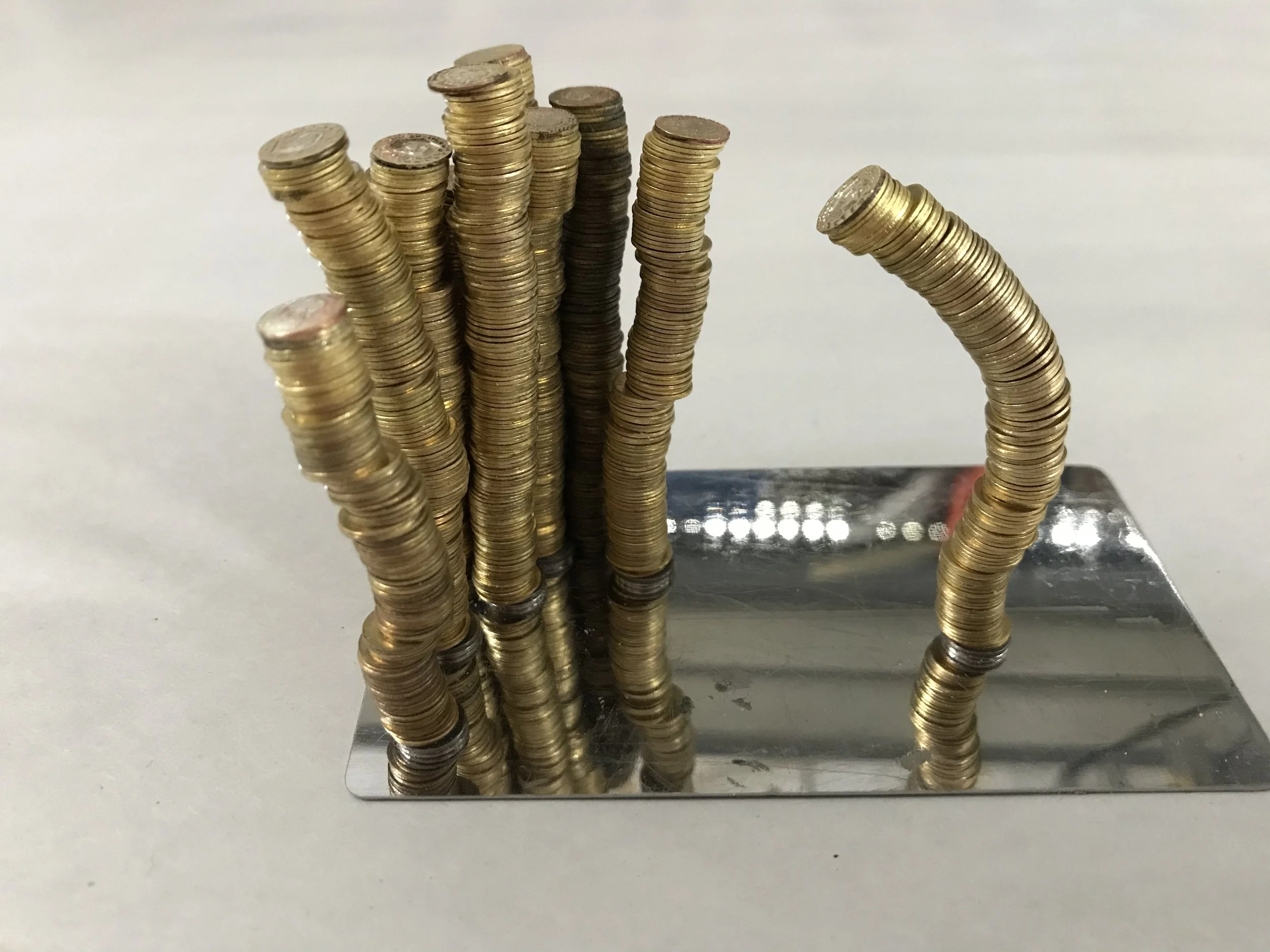
These stack of hundreds of coins needed to be able to animate across this suitcase and into Volpe’s money bag, and bend comically without falling over.
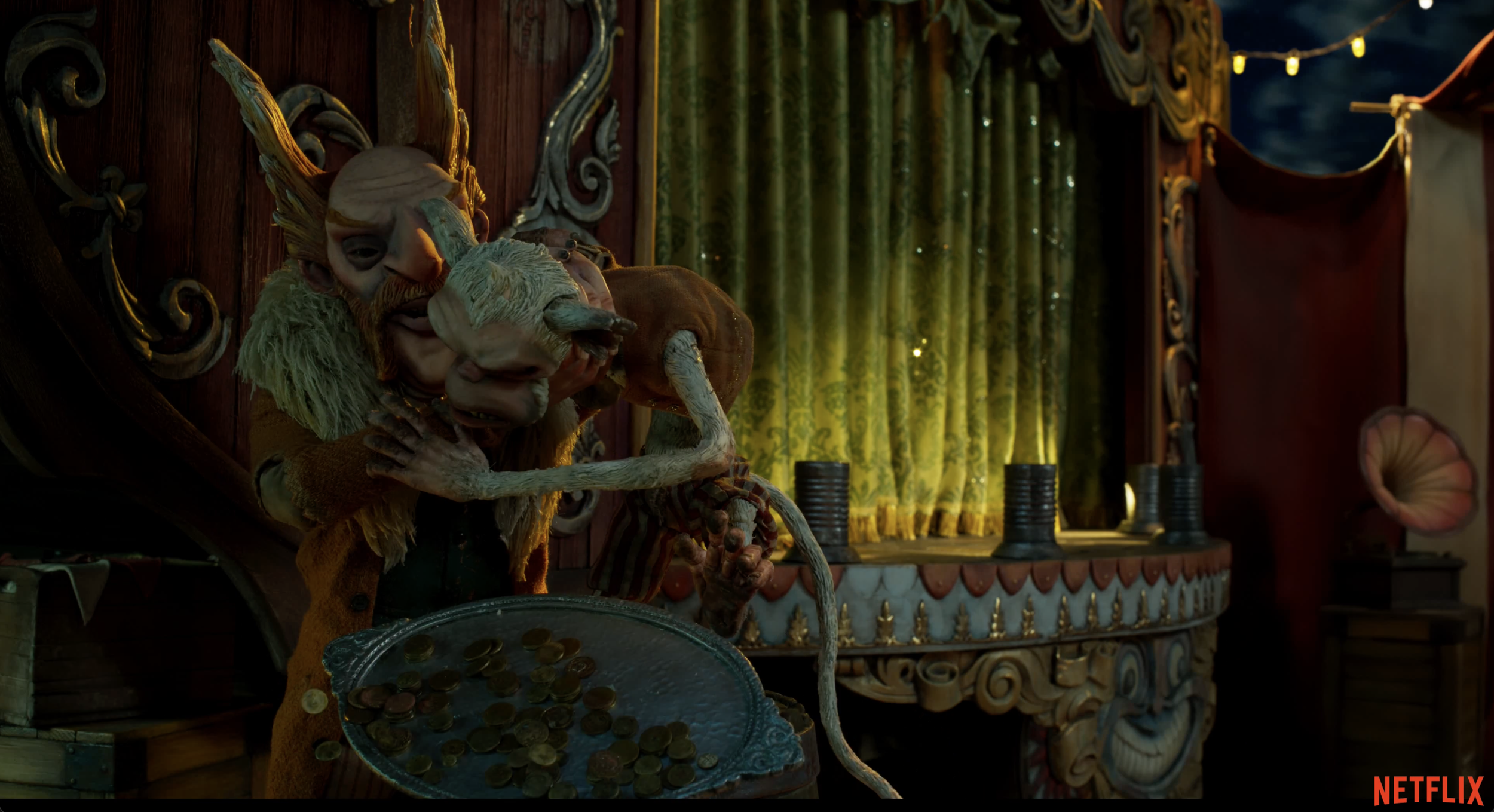
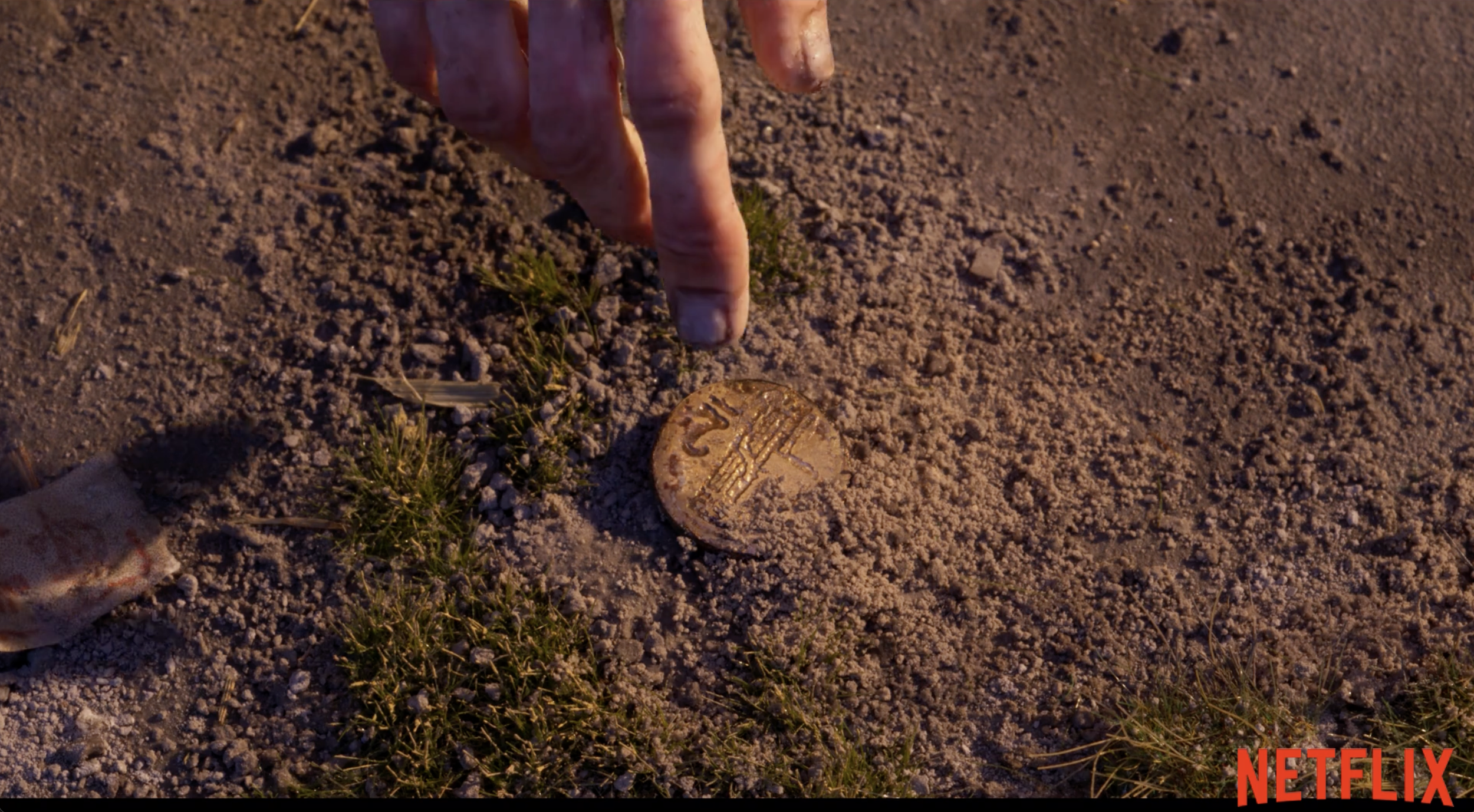
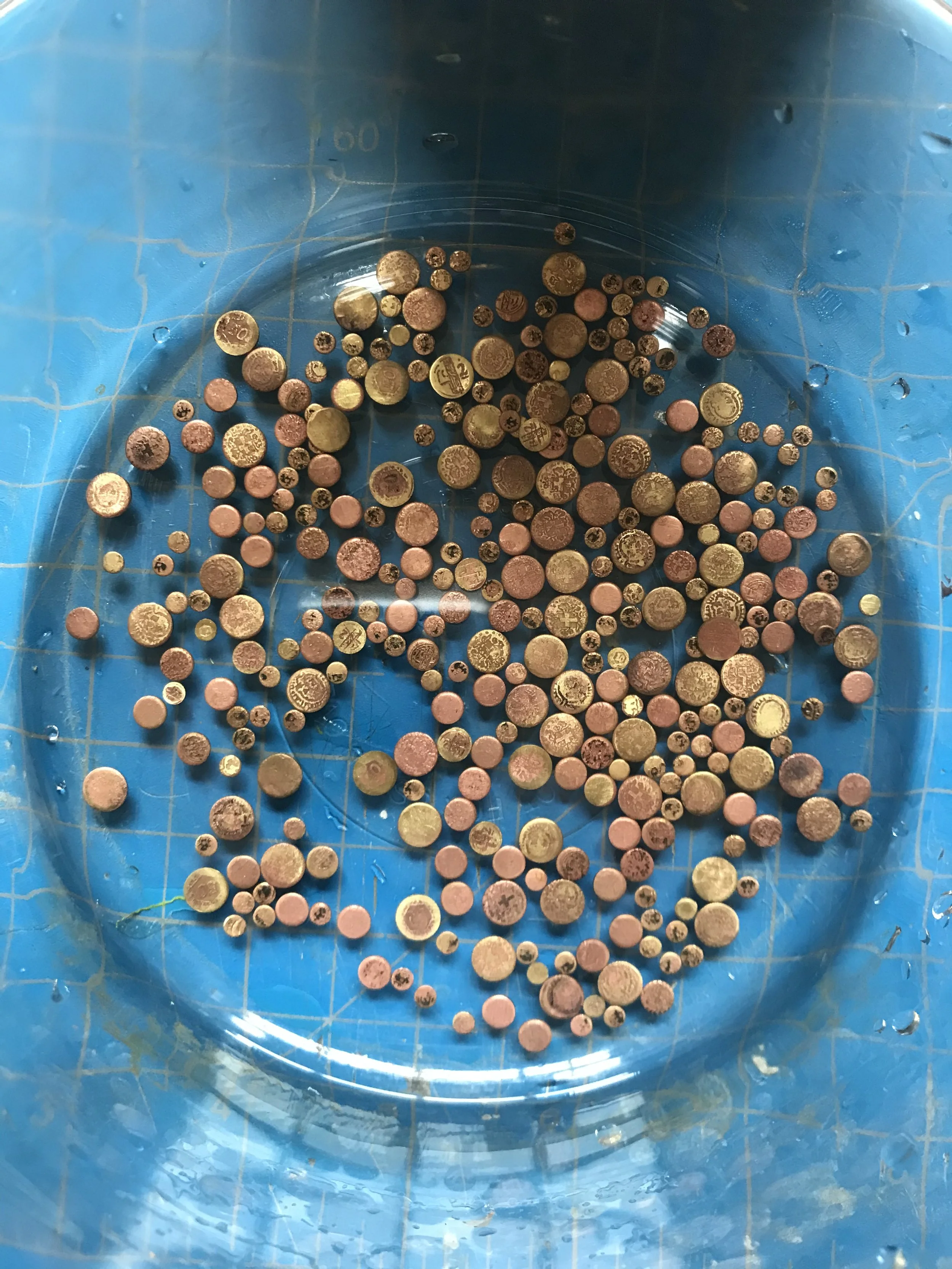
I came up with a pretty clever rigging system to do just that, using magnets and brass washers, as well using the process of chemically etching detailed graphics onto brass for some hero shots.
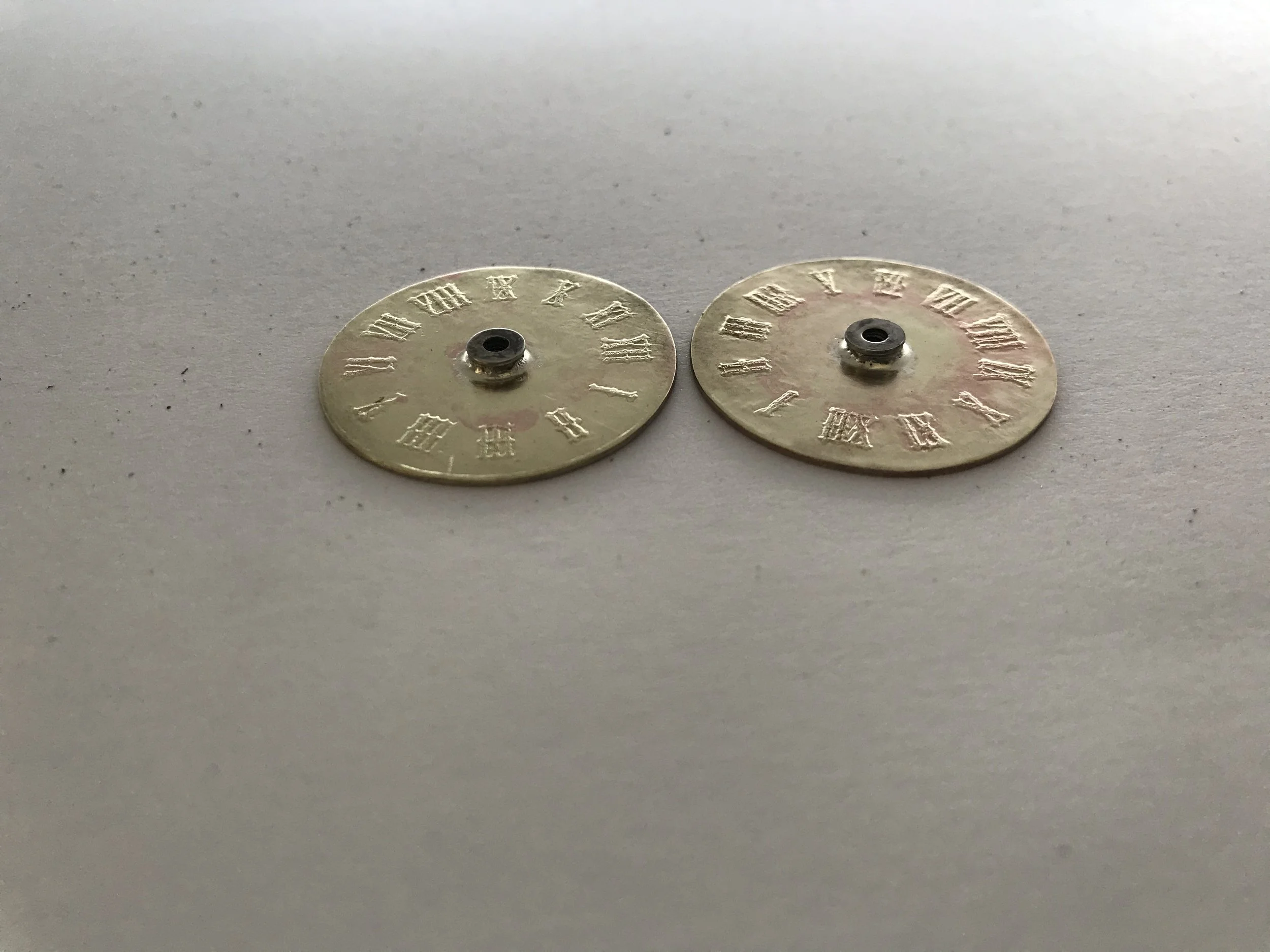
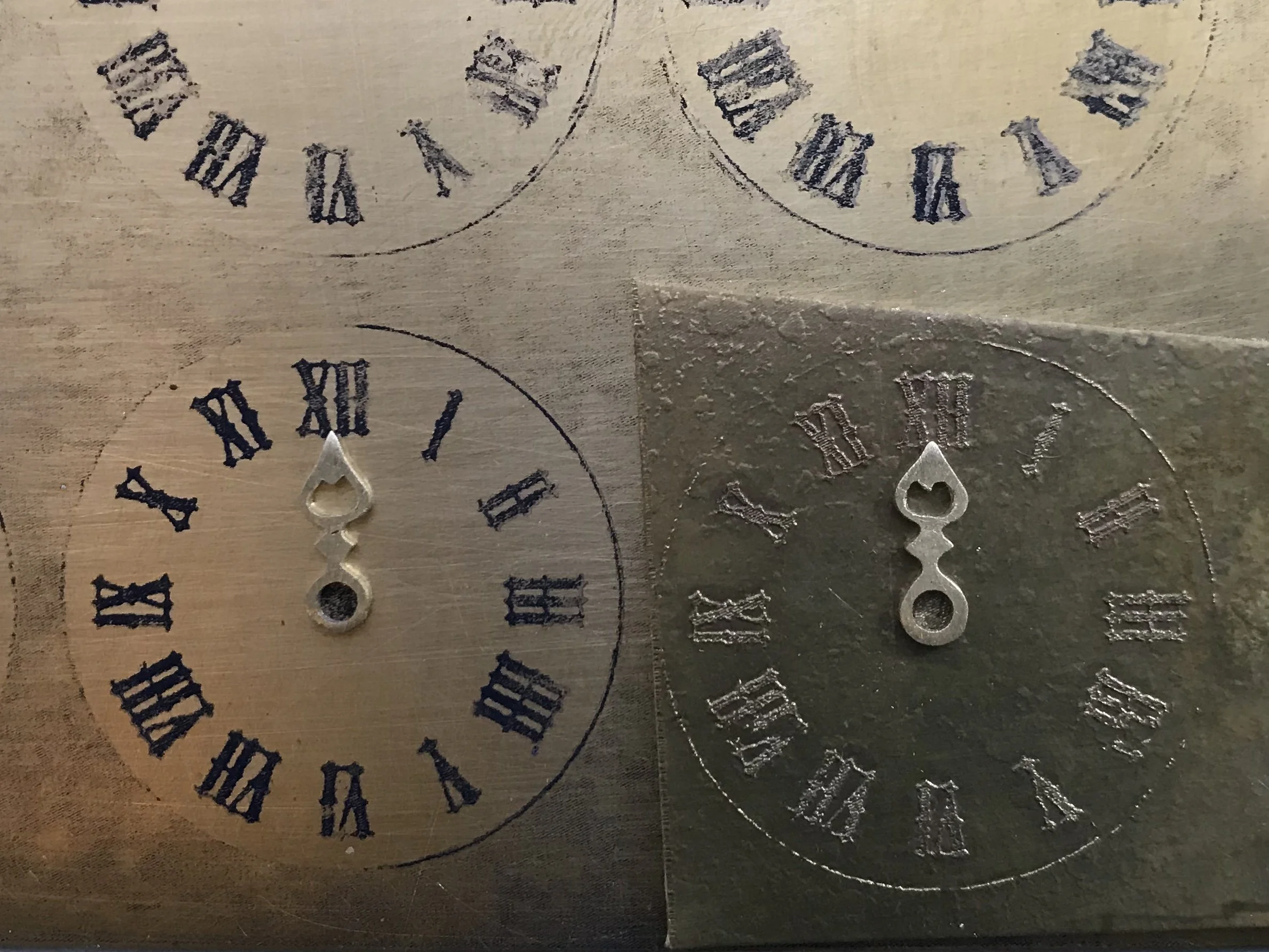
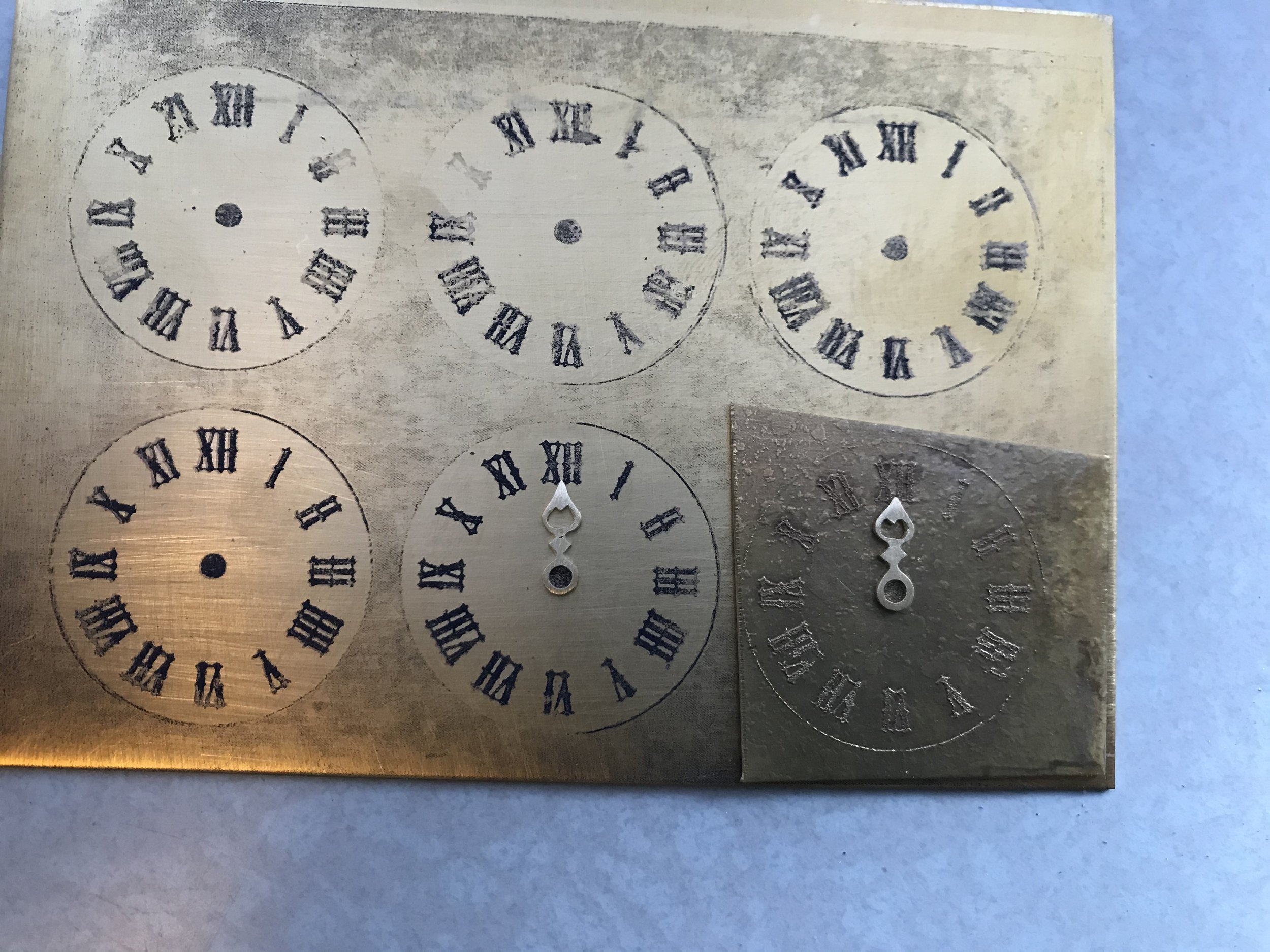
I used the same etching process that I had come up with to make a the clock face for one of the cuckoo clocks as well.
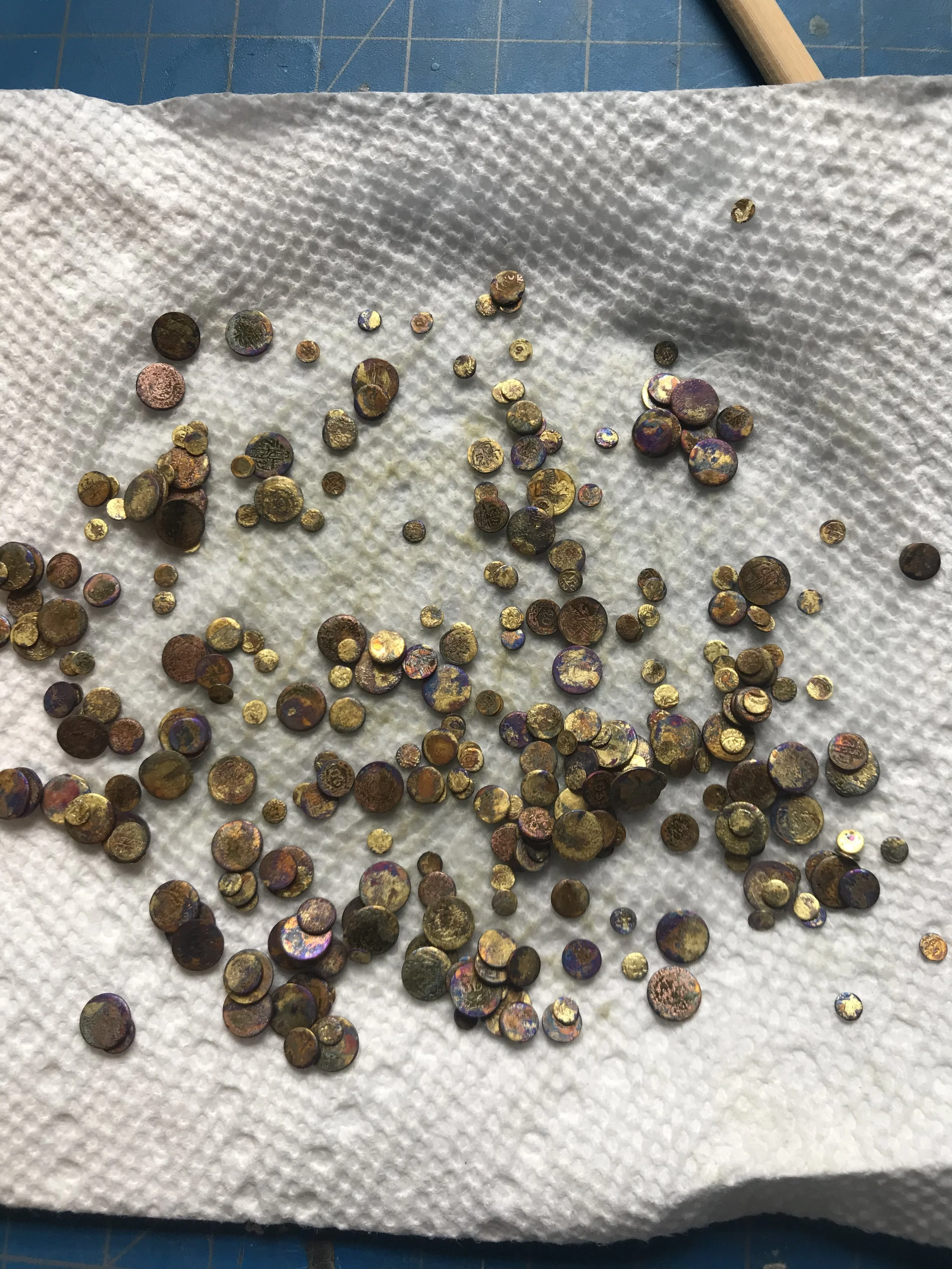
More Brass Props:
I ended up being the go-to metals fabricator in the model shop for much of my time on Pinocchio. I have a personal jewelry practice which has really helped me excel when it comes to metalworking as a model maker. Plus during Covid my home soldering studio came in handy.
Many of the props I make have built in rigging which makes it much easier to perform once they are on stage and helps ease the burden of the rigging department. I always check in with rigging and also practical lighting and animation to ensure that my designs are optimized for efficiency for each department. I then let the set dressers know what features are available so that my efforts aren’t missed once the prop leaves my hands.
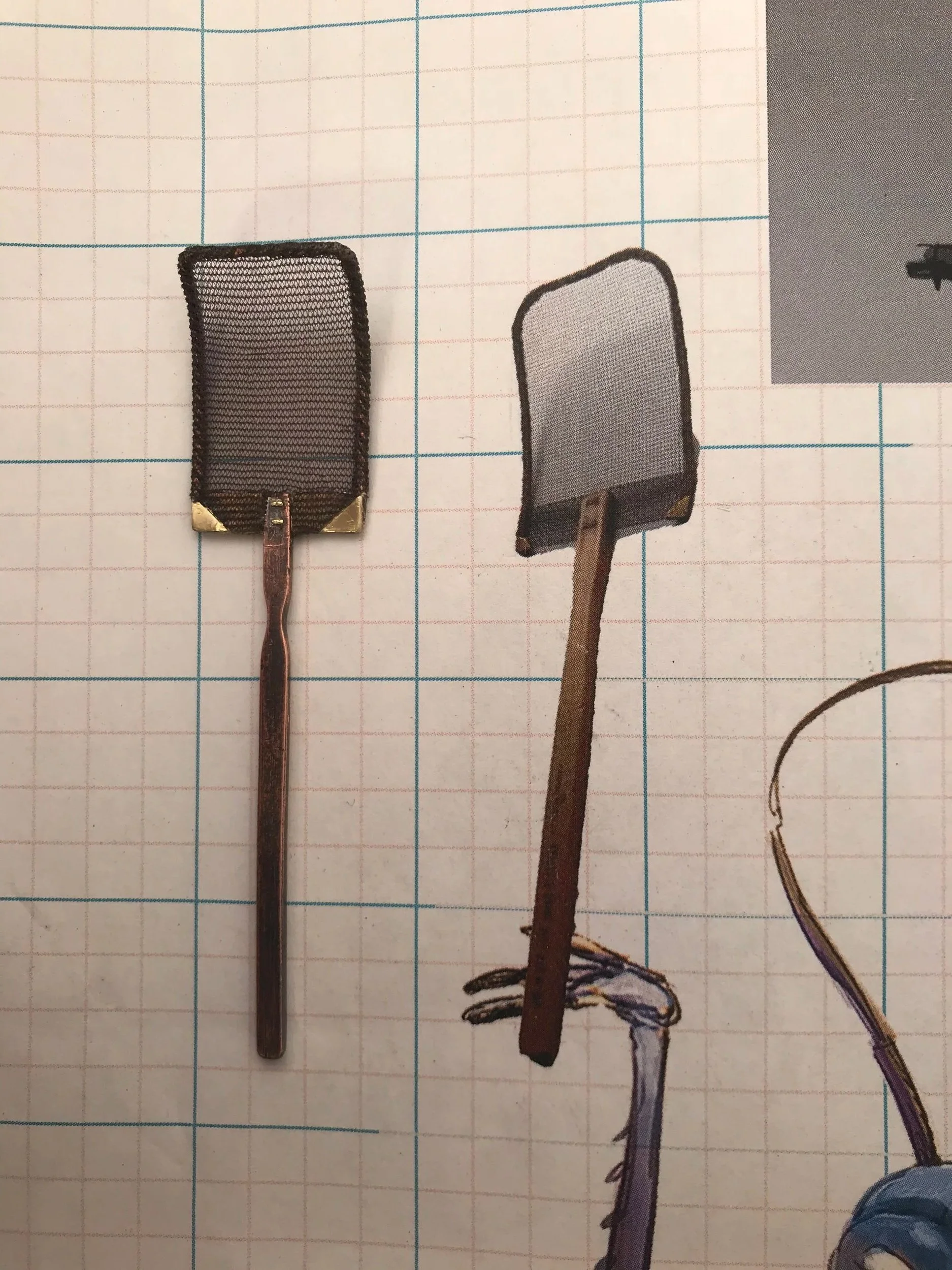
This flyswatter needed to bend during animation so I made it out of metal for durability. I chose copper because it has the best flexibility and work-hardens less quickly than brass. This also meant that we could skip the primer and paint step and I just put a liver of sulphur patina straight on the copper handle then rubbed it to age it. This way when it flexed there would be no risk of paint cracking off. Also, fake metal paint doesn’t look great at this tiny scale. The netting is made with pantyhose.

Cricket’s lantern attached to his pack.
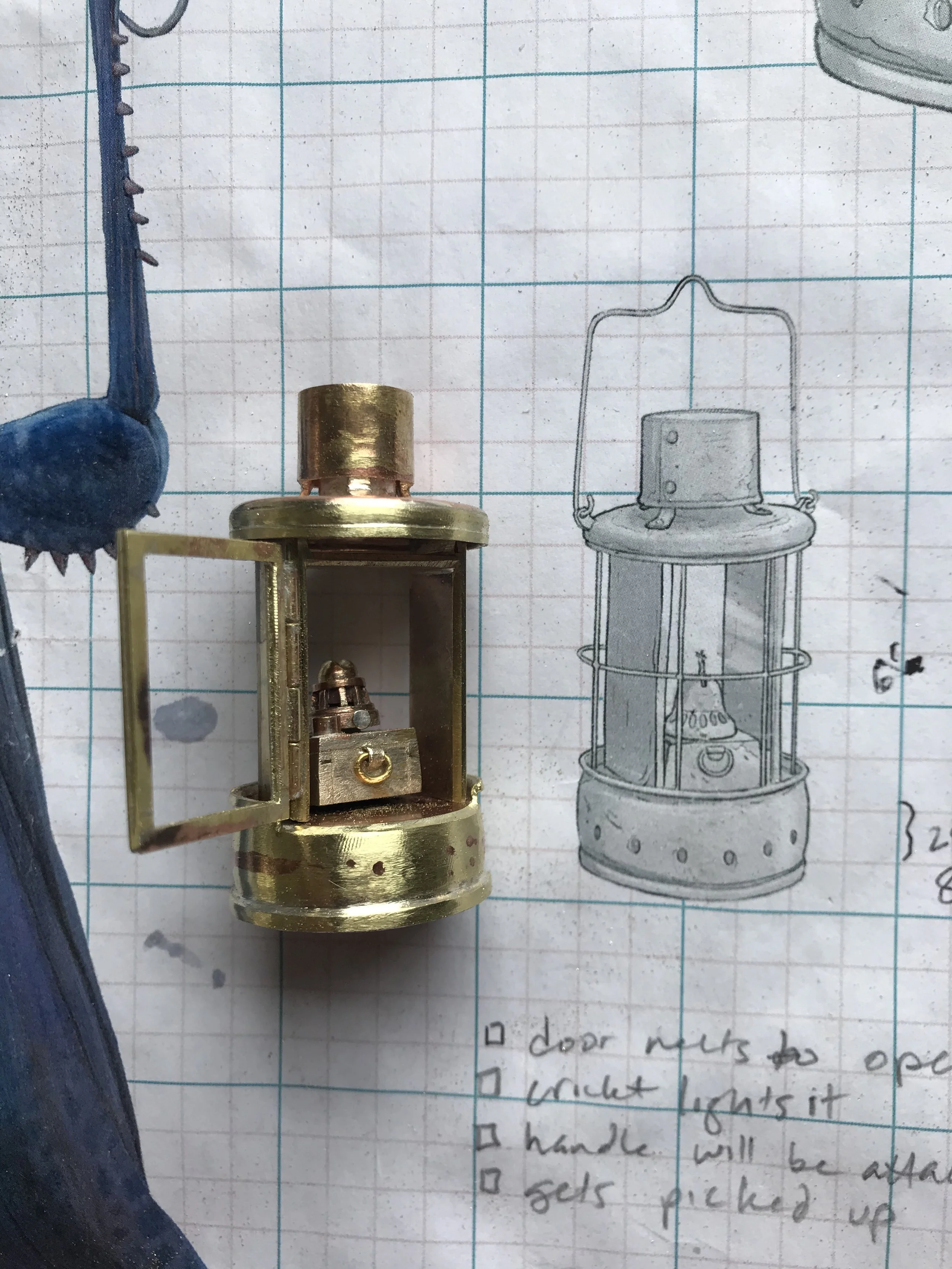
Cricket’s oil lantern in progress that he carried around on his backpack. In one scene he opens the door and lights the wick so the door had to open smoothly with custom soldered hinges.
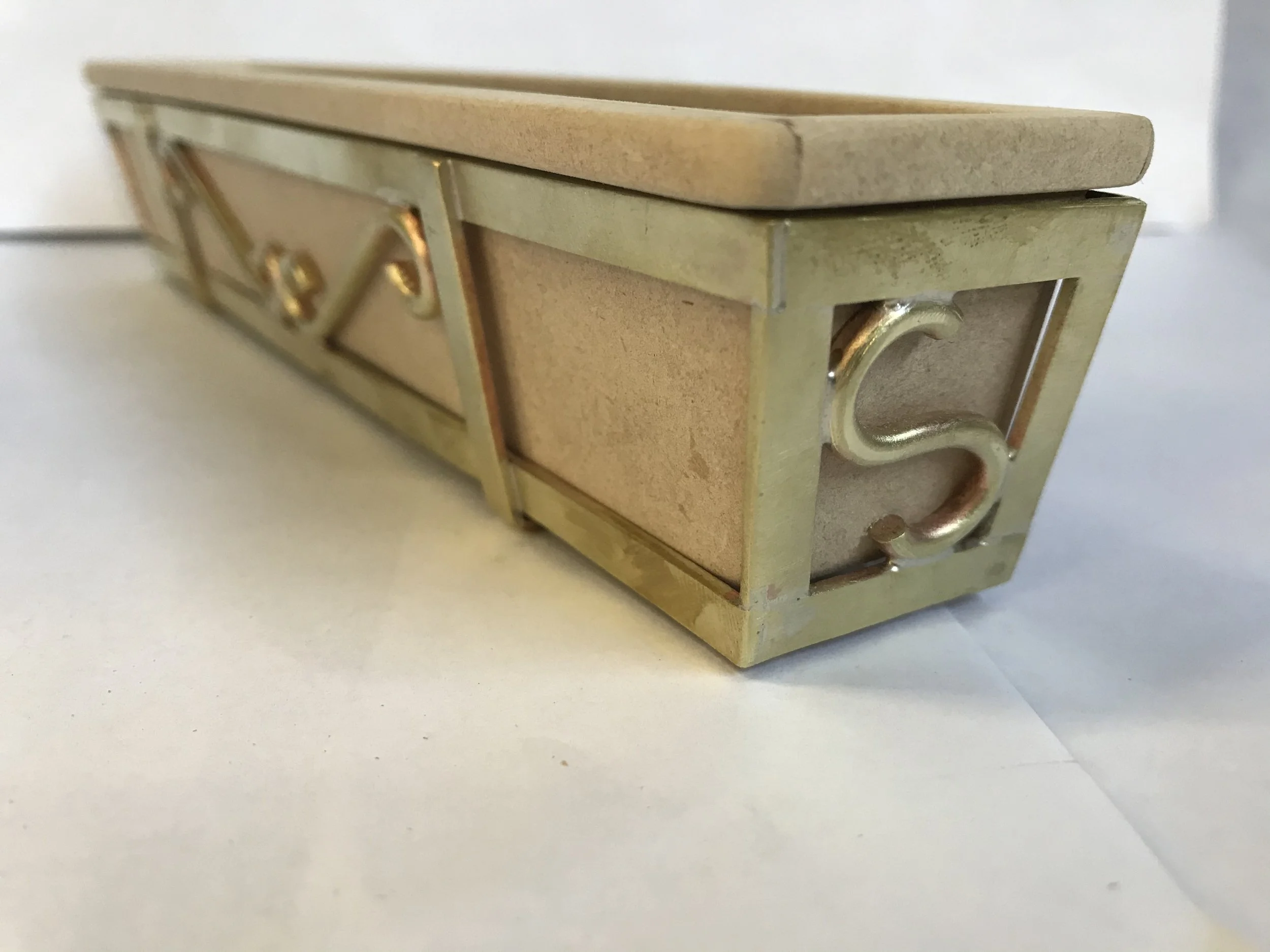
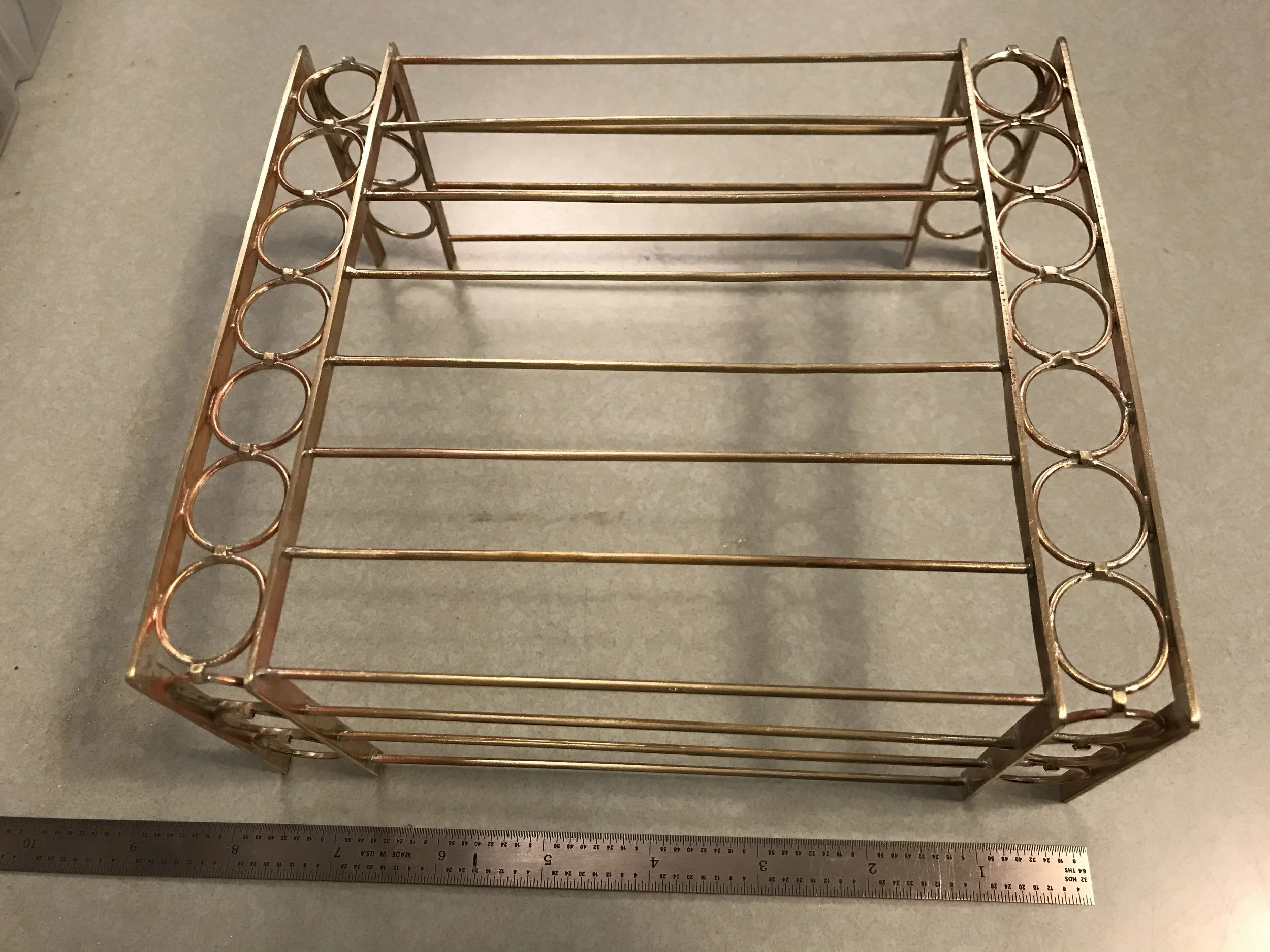
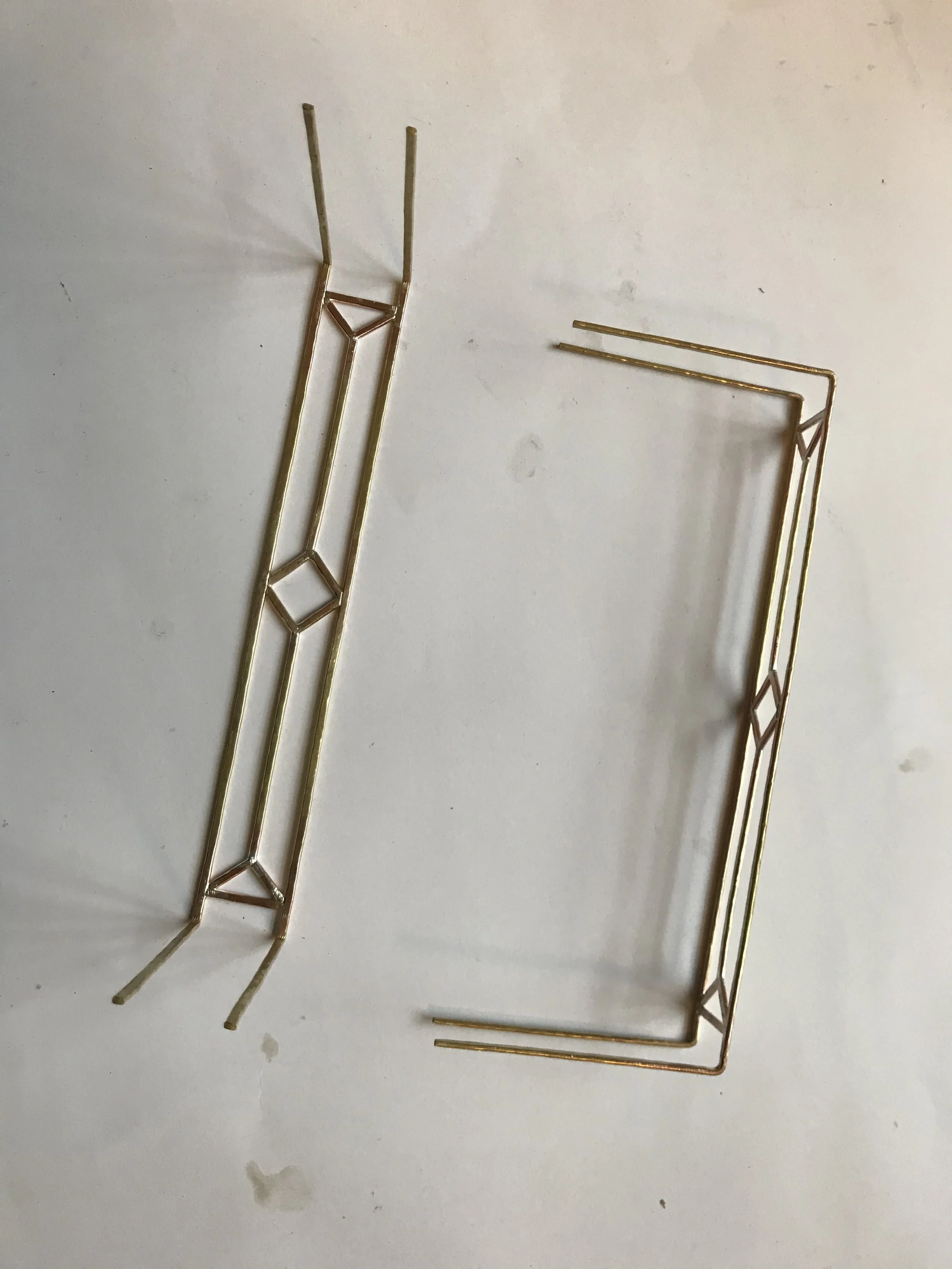
A few of many balcony railings that I painstakingly made in my home studio while working from home during Covid. Unfortunately the whole scene got cut so they never made it to screen.
Sculpture
Sculpting in oil clay is one of my favorite mediums to work in and always feels like a treat when I have the opportunity to do so. Sometimes I sculpt the basic design, make a mold of it and cast it into a material that allows for even finer detail. The possibilities are endless!
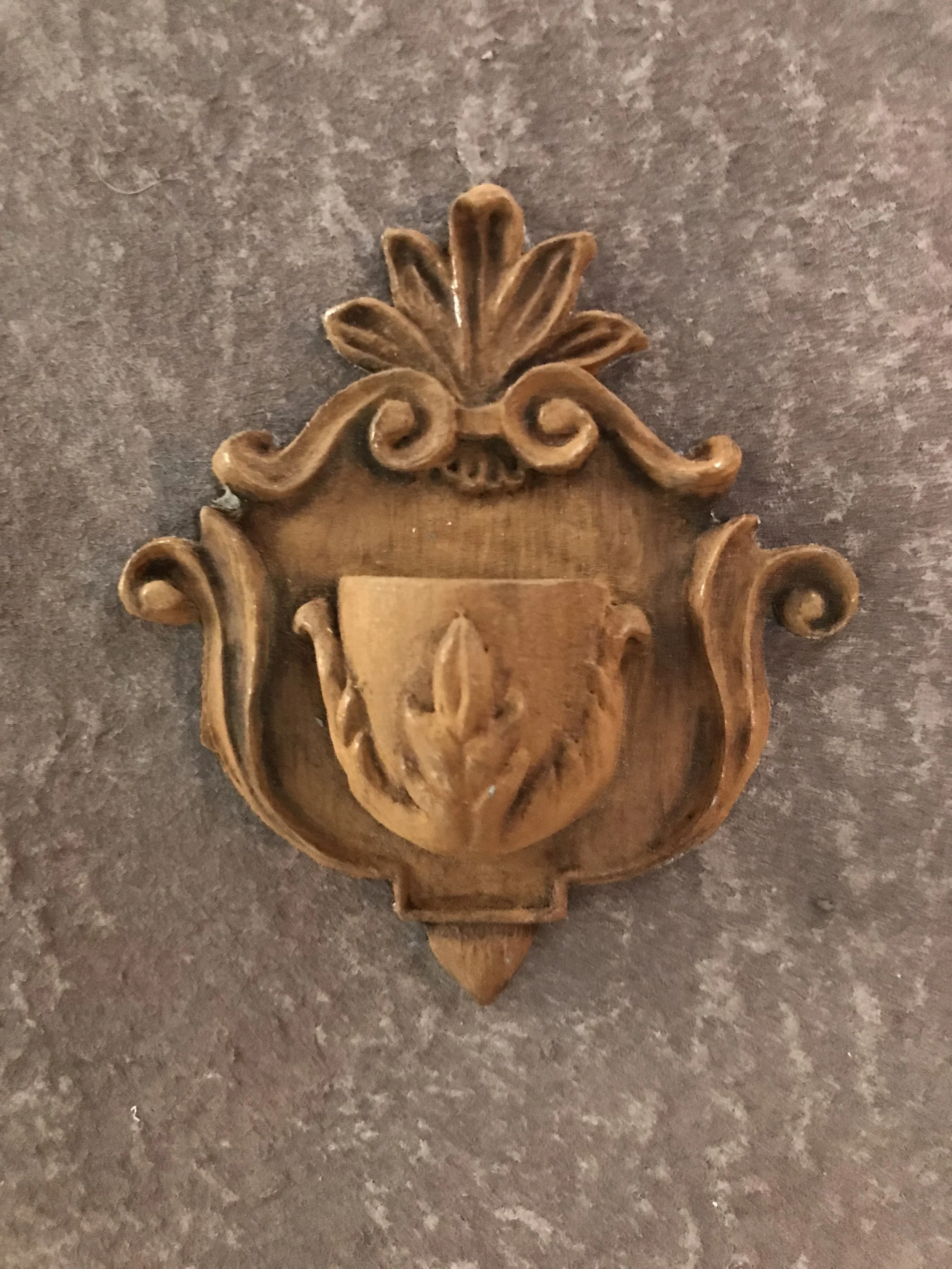
This is a final painted version of the holy water font that lived in the church. I sculpted the original out if oil clay then made a mold of it. This is a painted casting.
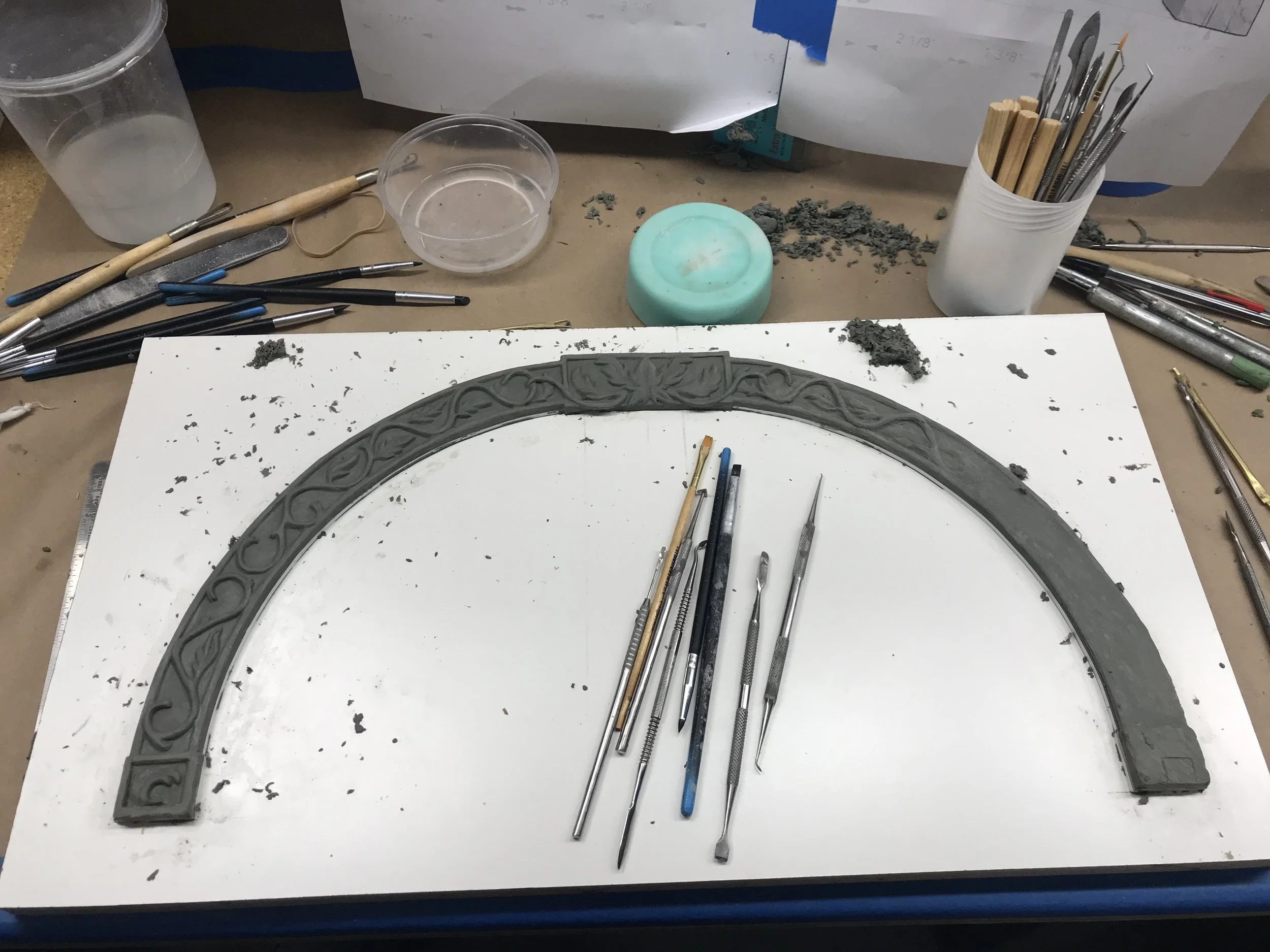
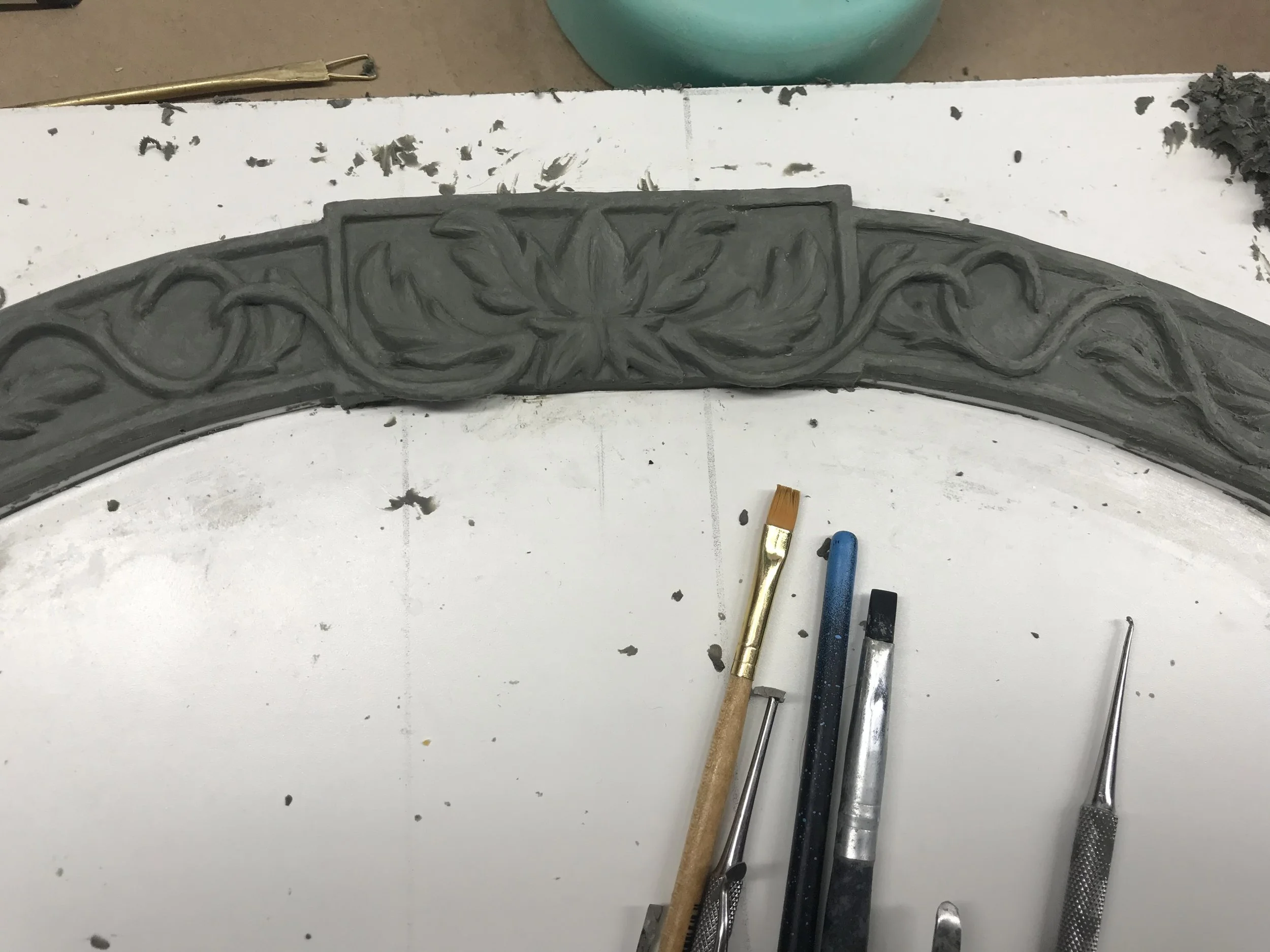
Oil clay sculpture in progress of the arc that is above Geppetto’s window in the workshop.
Mixed Material Prop
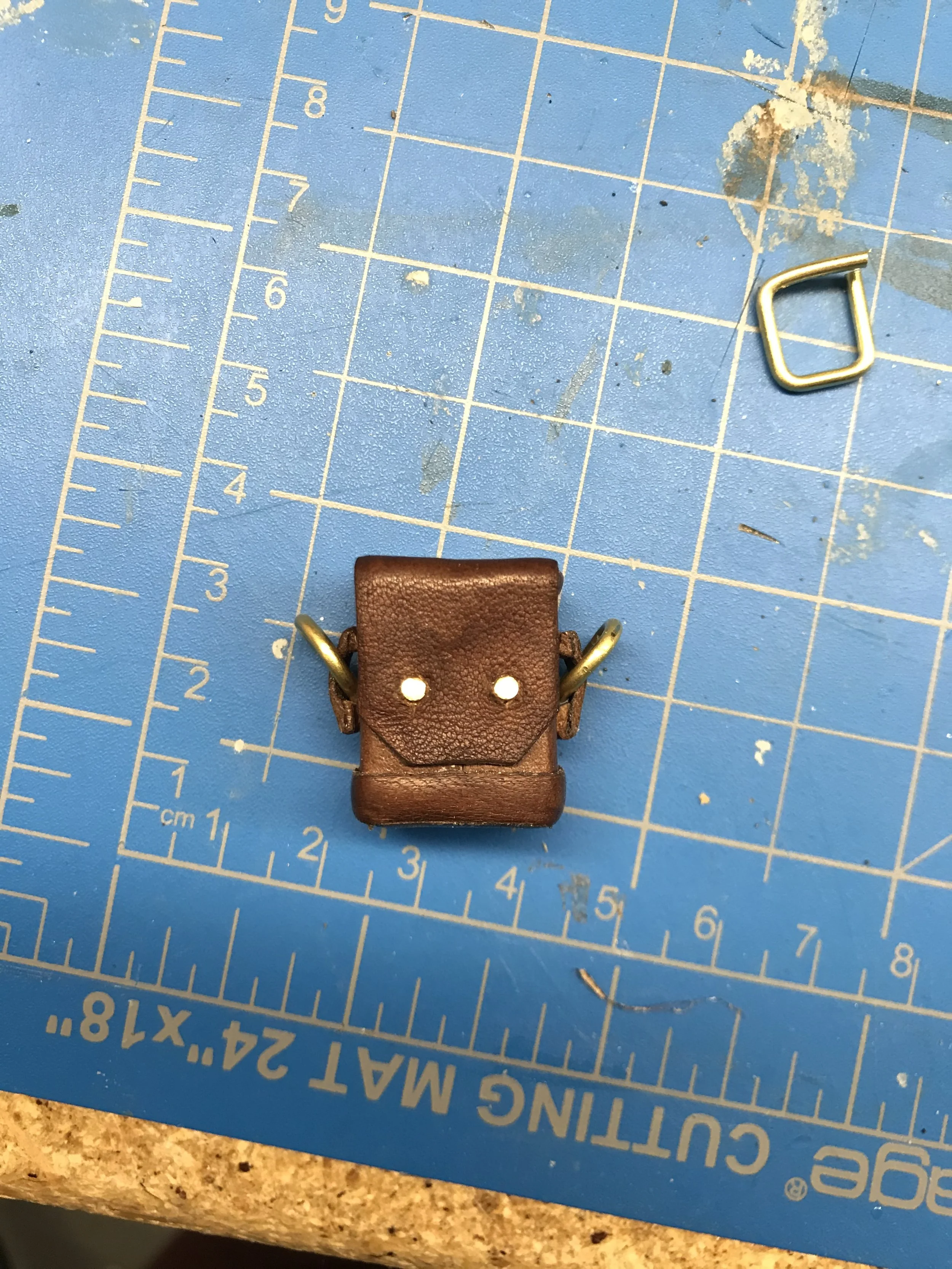
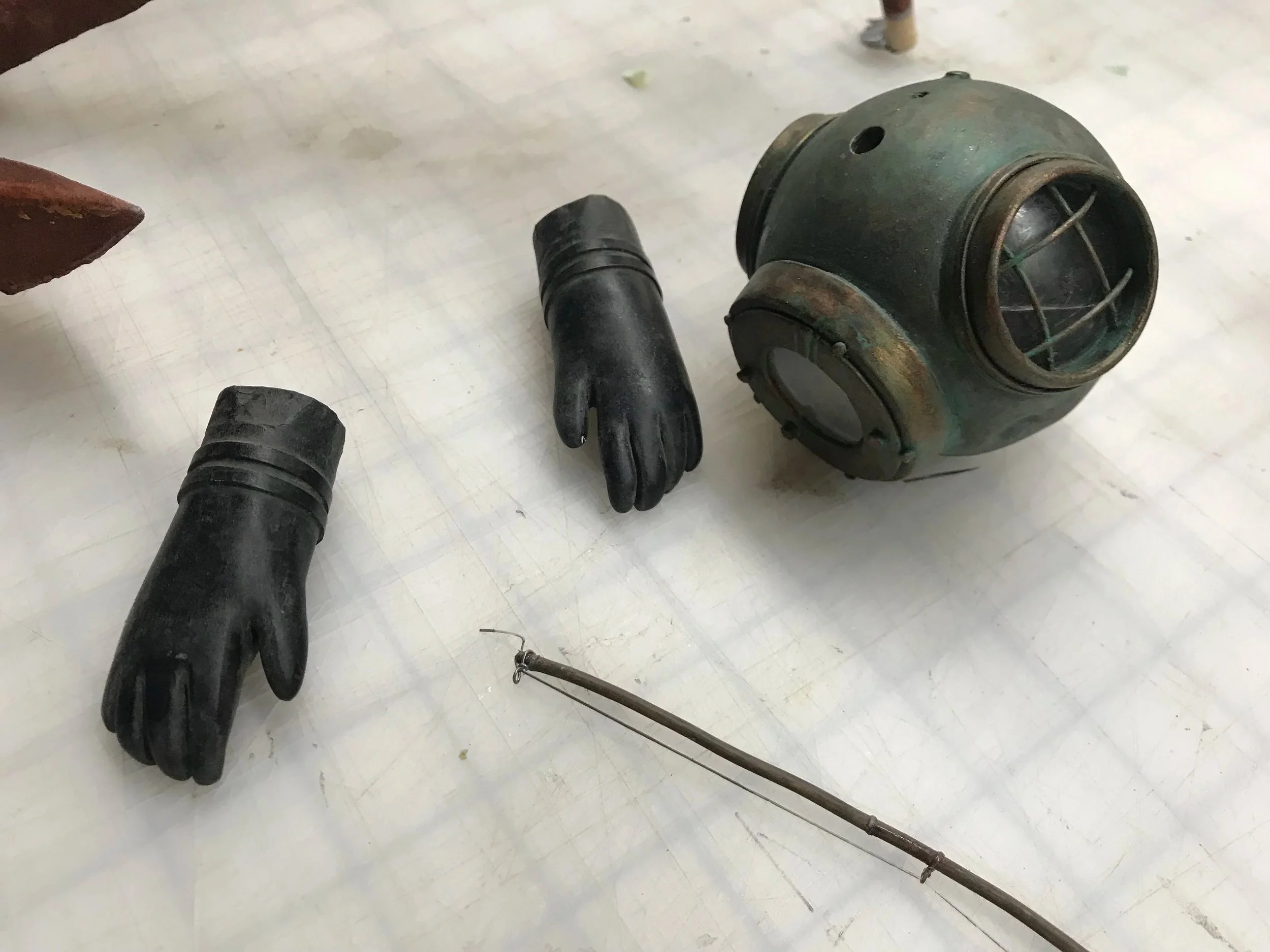
Often it is more efficient to start with an existing shape rather than create it from sctratch. Here I repurposed a plastic sphere, sliced some ring shapes off a PVC pipe and eased the seams with epoxy. I patterened the little diver suit and sewed it together and made all sorts of accessories for it. This guy was swallowed by the dogfish and embedded in mud in the film so I think it looked nicer on my desk. This prop had so little screen time but it was one of my favorite pieces to work on because it combined all manner of materials from textile, to leather, to sculpting and more. Plus its so cute and it reminds me of the cover of my favorite book from my childhood, 20,000 Leagues Under the Sea!
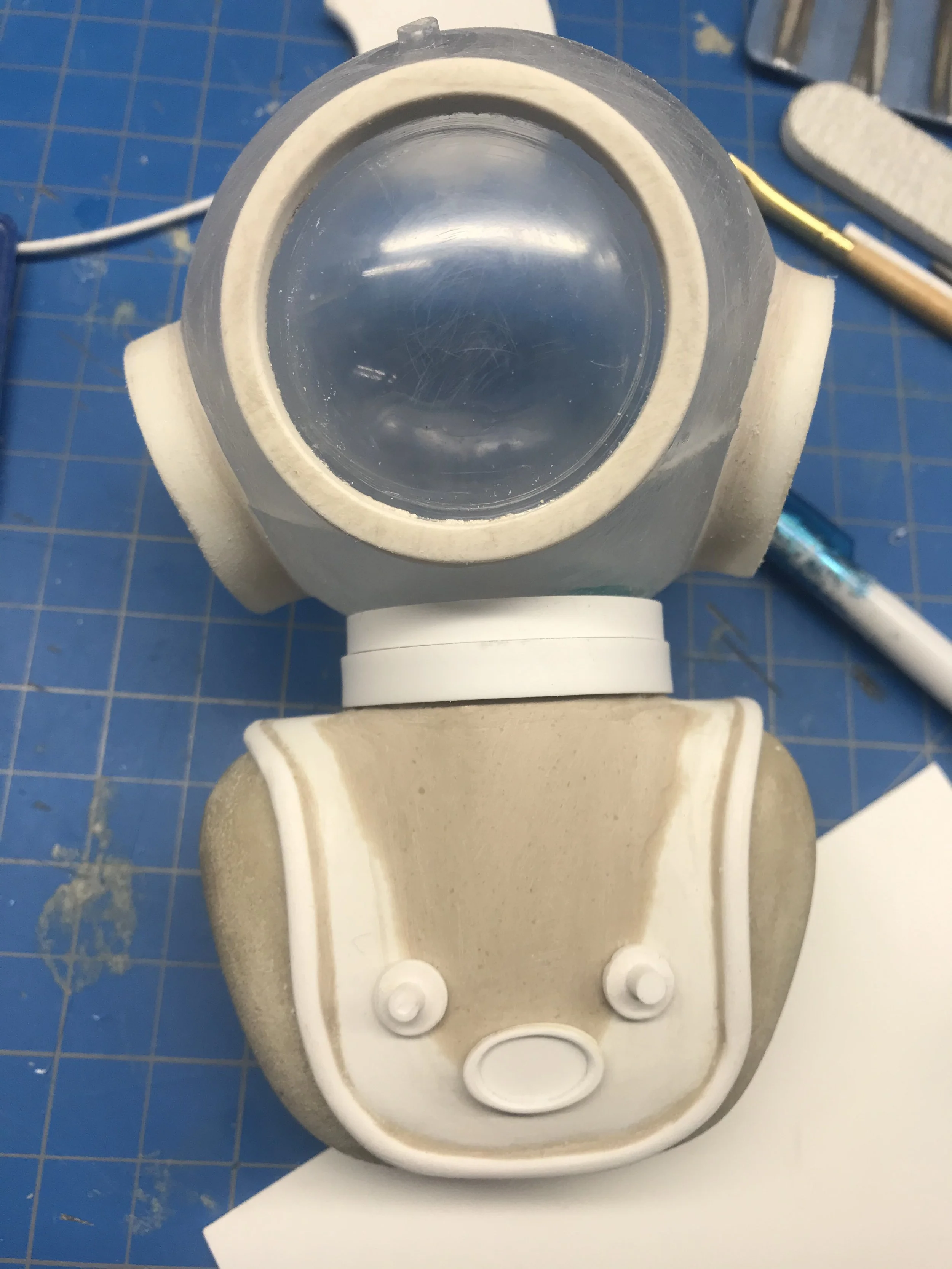
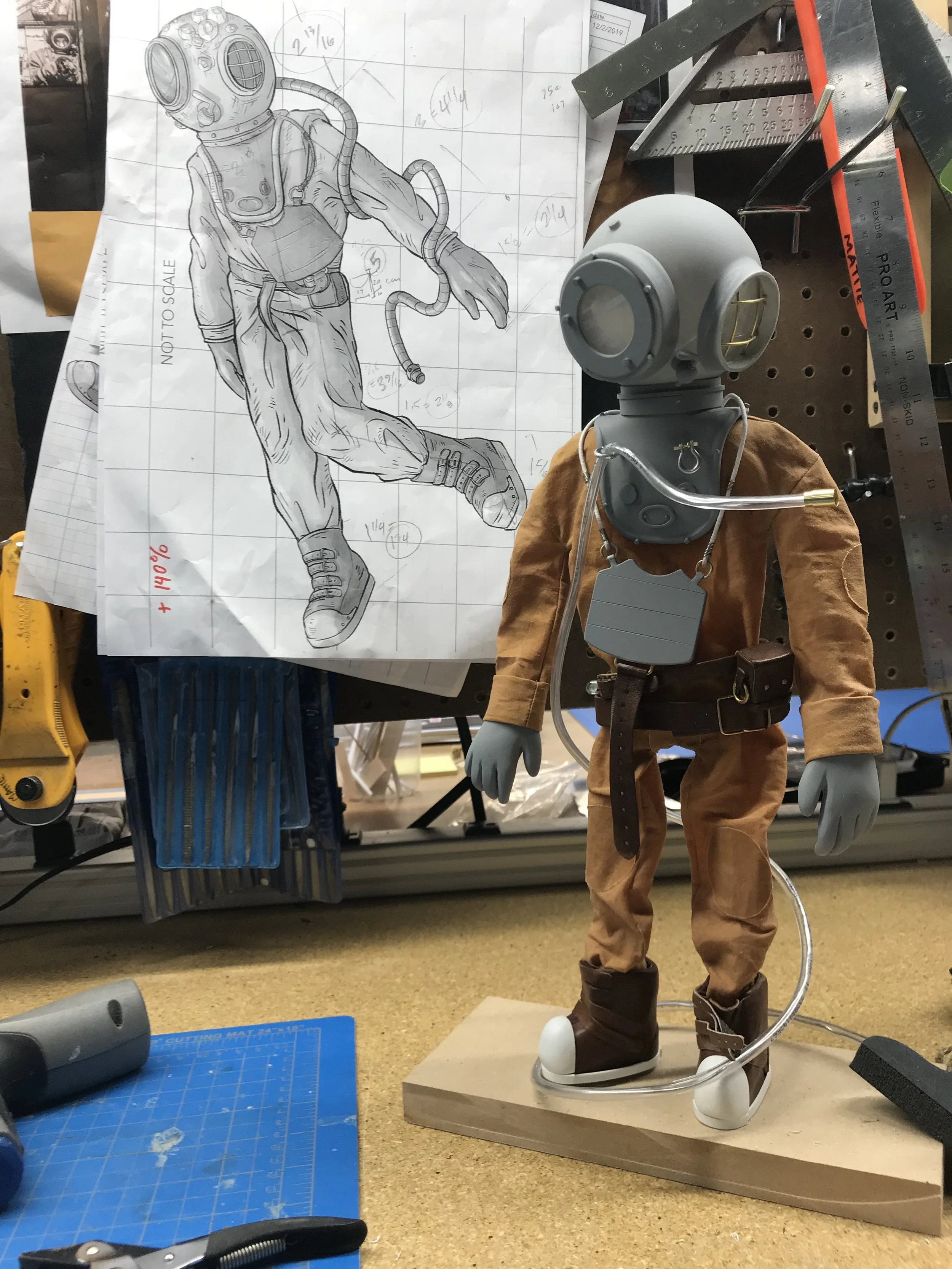
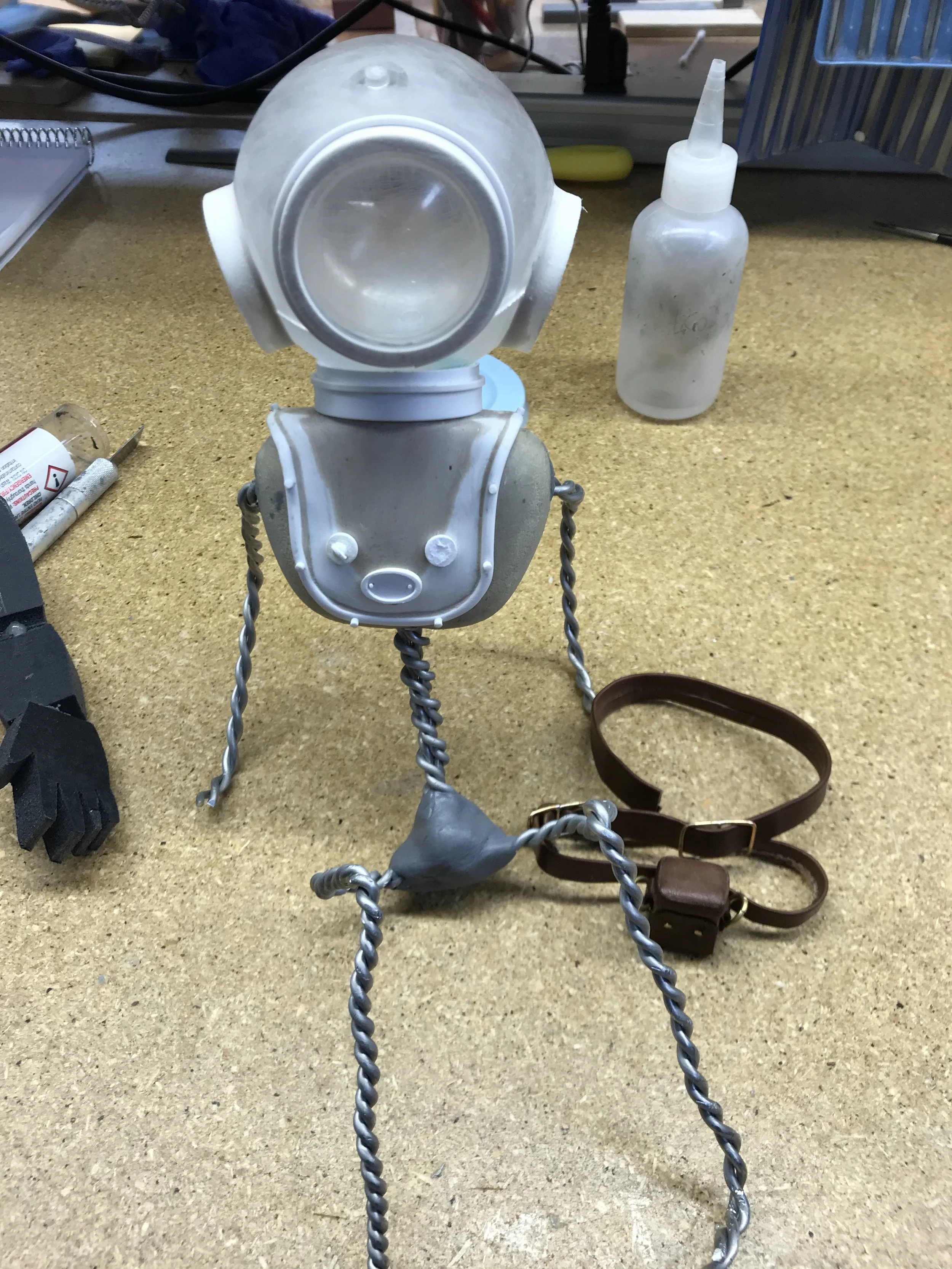
I built a simple wire armature for the interior of the suit so that it would be easier for the set dressers to pose.
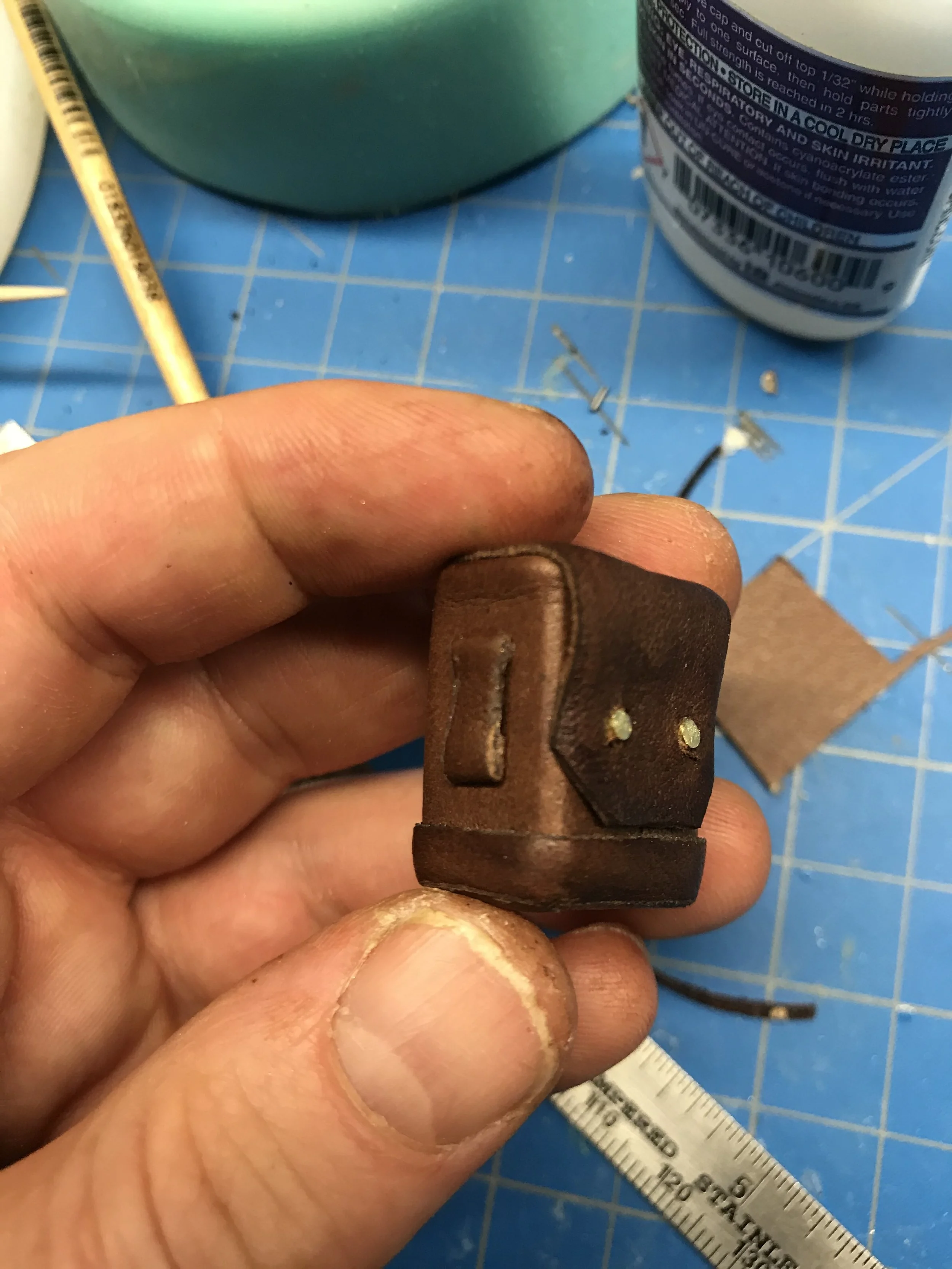
The accessories make the outfit!
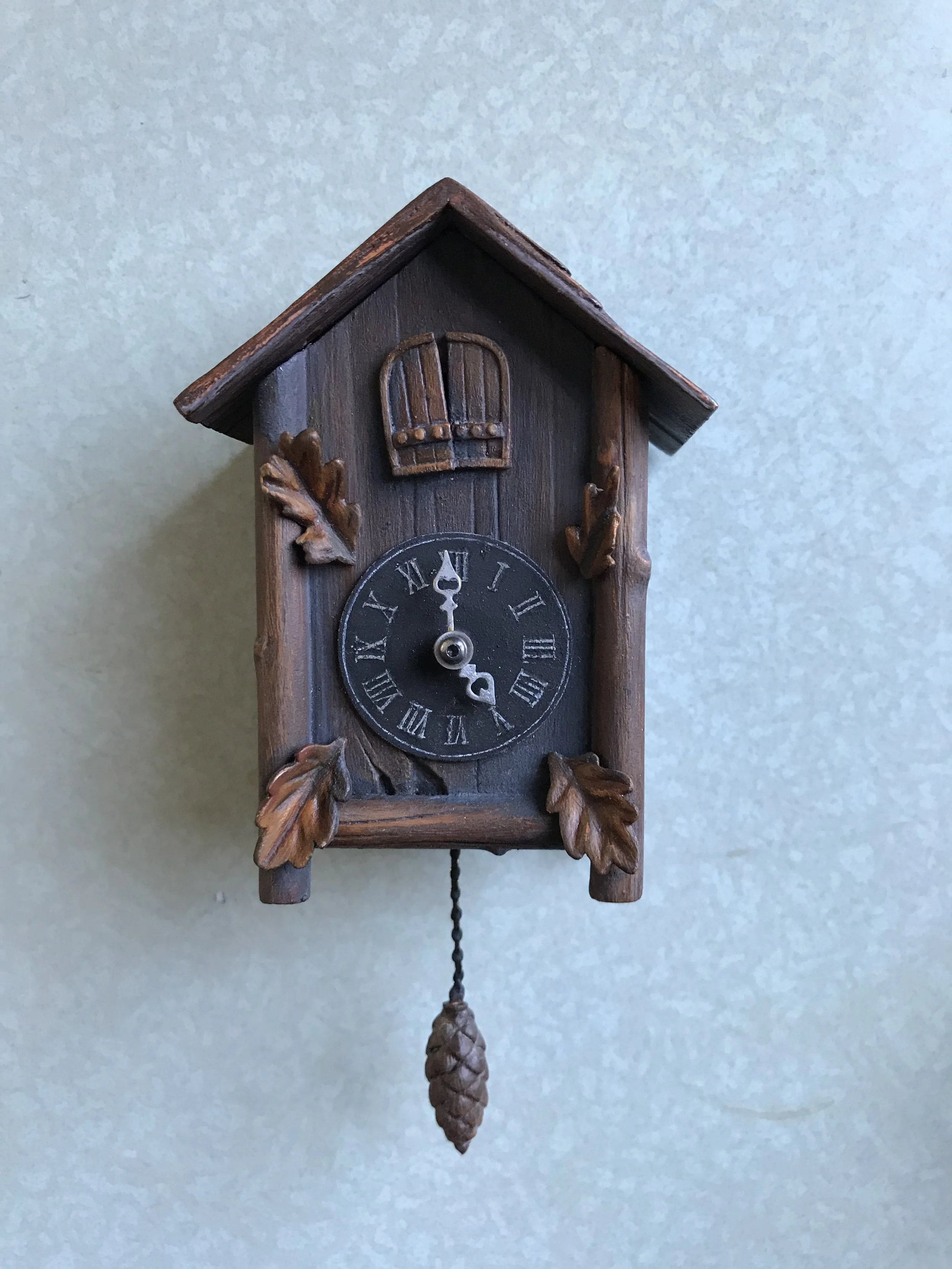
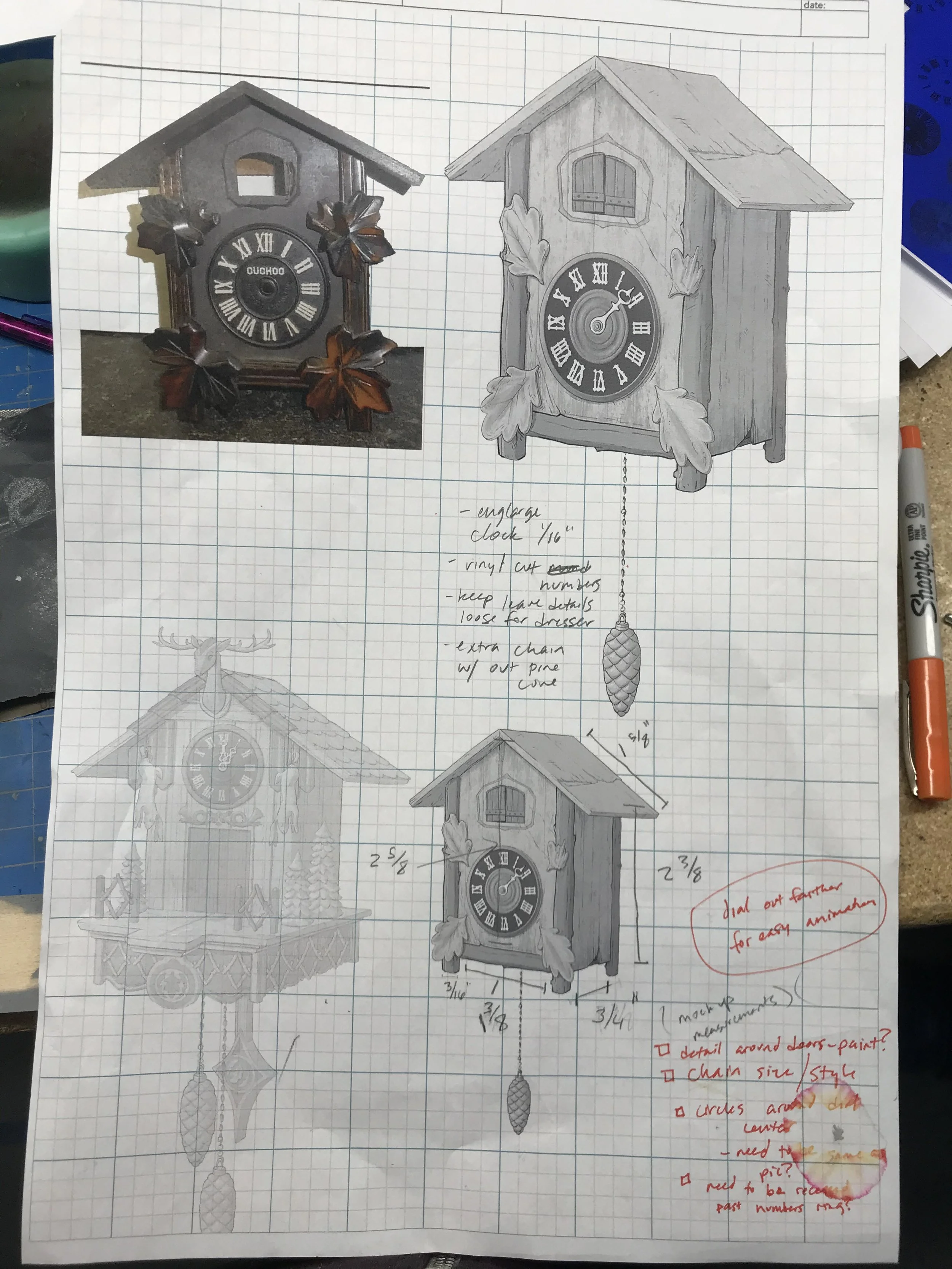
Model Maker: Cuckoo Clock
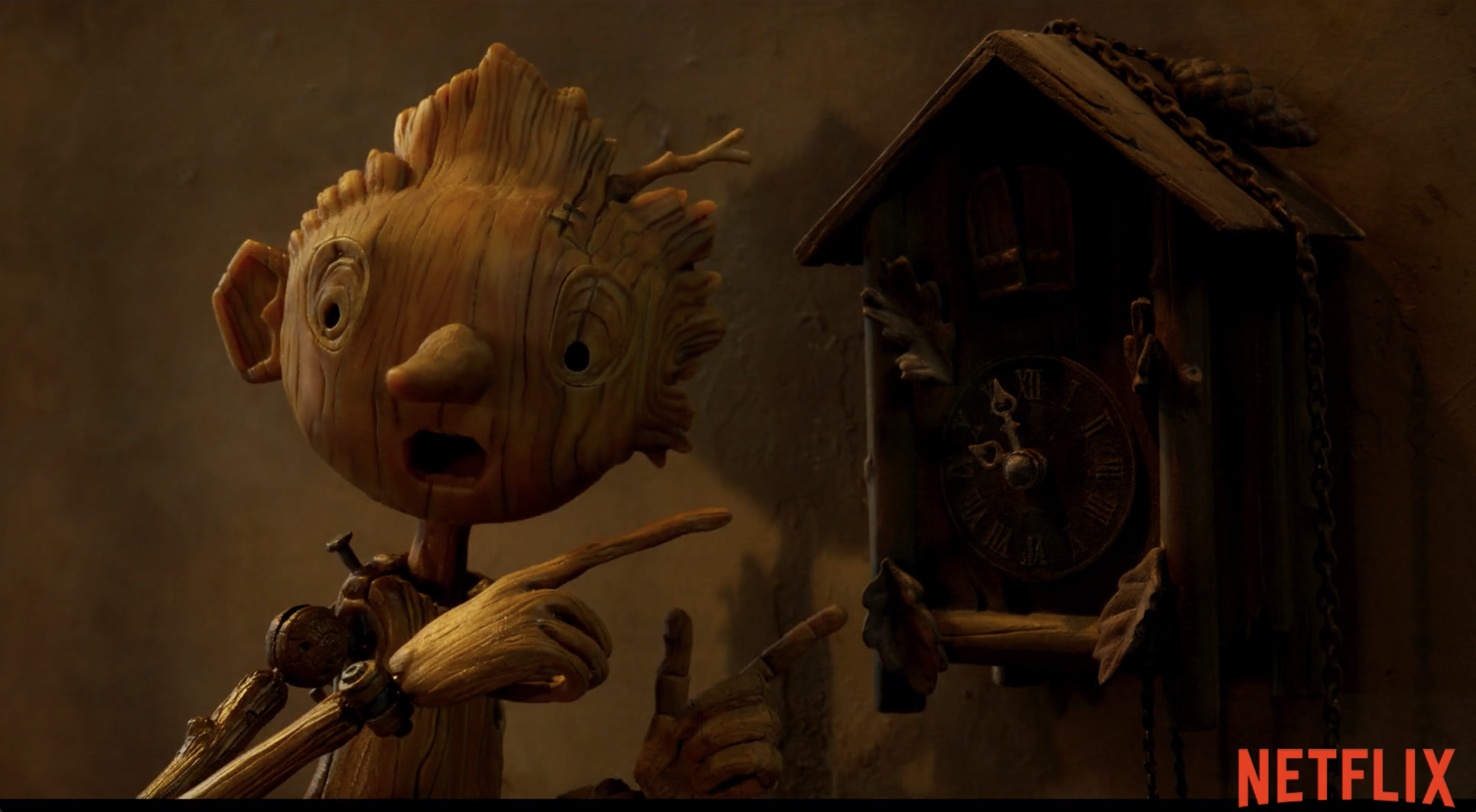
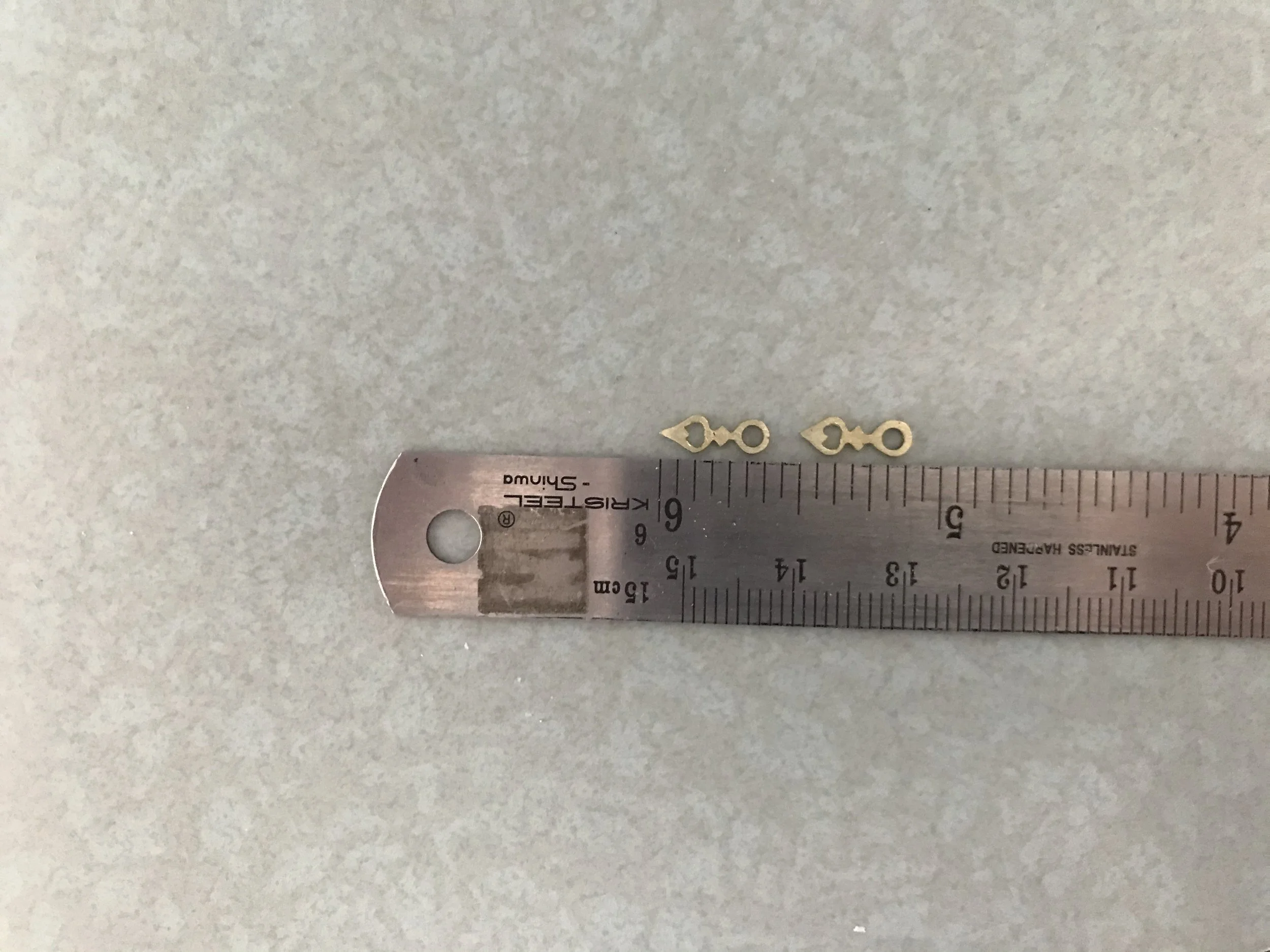
Instead of stenciling tiny numbers I acid etched the clock face so they would have a little relief. It’s too bad you can’t even see them!
Nonetheless, props like this are very fun to make, with all the little sculptural components and moving parts.
Moving forward I would question the necessity of acid etching the numbers. It didn’t take a long time, but did require some R&D.
The good news is that the materials and skill came in handy for making the coins as seen above!
Set Dressing
Set Dressing is, at its best, a team effort and we all pitch in on each other’s assigned sets from time to time, and frequently sets change hands over the course of a production. Everything you see below was the work of so many hands. Here are a few sets that I spent many hours on throughout my tenure as a Set Dresser on Pinocchio.